 800-503-2102
 Chat with ZAF
Key Takeaways:
- Follow a clear, step-by-step checklist after a car accident to protect your health, document your case, and avoid common mistakes that can cost you thousands.
- Understand the real costs and who pays for medical care, police reports, and other expenses—so you can make informed decisions at every stage of your claim.
- ZAF Legal’s free AI-powered assistant helps you organize your claim, understand your rights, and choose the level of support that fits your needs—whether you DIY or seek expert legal help.
Most people make three costly mistakes in the first ten minutes after a crash: they skip medical care due to cost fears, accept blame without knowing the facts, or give recorded statements before understanding their rights. According to AARP’s safety experts, these quick decisions can cost thousands in medical bills, lost wages, and compensation.
That’s why this step-by-step checklist after a car accident gives you a practical, phone-friendly guide you can actually follow on a stressful day. Each step includes honest notes about costs and who typically pays, so you can make informed choices about medical care, documentation, and your claim without the overwhelm. Whether you handle things yourself or need expert help, ZAF Legal provides a free AI assistant to help you understand where you stand and choose the support that fits your situation.
What This Car Accident Checklist Covers (And How to Use It)
This checklist guides you through 12 practical steps in the order that makes sense when you’re dealing with a real accident. We start with immediate safety and medical concerns, then move to documentation, insurance notifications, and understanding your rights. Each step includes honest notes about costs — like who typically pays for ambulance rides, ER visits, or follow-up care when a claim is approved.
Beyond just organizing the immediate steps, the checklist gives you everything you need to build a strong case summary, whether you choose to handle the claim yourself or connect with an attorney. ZAF’s free AI assistant helps you understand where you stand and organize your information into a clear summary you could use in settlement discussions.
You have real options here: DIY with the AI’s guidance, request a free consultation with an experienced attorney, or choose full-service representation with zero upfront fees. The claims handling process can feel overwhelming, but breaking it into manageable steps puts you back in control.
- Check for Injuries and Call for Help
Your immediate priority is to check for injuries after a car accident, even when everyone feels “fine.” Here’s how to assess the situation quickly and get help when needed.
- Scan yourself and passengers for visible bleeding, complaints of pain, or signs of confusion.
- Ask direct questions like “Does your neck hurt?” or “Are you dizzy?” to catch hidden symptoms.
- Call 911 if anyone reports pain or looks injured—ambulance costs are typically recoverable if the other driver is liable.
- Take quick photos of visible injuries or note symptoms in your phone before adrenaline wears off.
The U.S. Department of Transportation emphasizes that rapid medical response saves lives, and emergency medical services respond to approximately 1.5 million motor vehicle crashes each year. Early documentation of injuries protects both your health and helps you understand your claim options if you need compensation later.
- Move to Safety If You Can Do So Safely
Your first priority after checking for injuries is getting everyone out of traffic’s path. Moving quickly but carefully to a safe location protects you from additional collisions and gives you space to handle everything else calmly.
Getting everyone to a safe location away from traffic protects you from additional collisions and gives you space to handle everything else calmly.
- Turn on hazard lights immediately to alert other drivers to the situation.
- Move drivable vehicles to the shoulder, parking lot, or side street if possible.
- Exit your vehicle and move to a safe area away from traffic if cars can’t be moved.
- Stay visible by standing behind barriers, on sidewalks, or well off the roadway.
- Avoid walking in traffic lanes or standing between vehicles and oncoming cars.
Remember, getting the perfect photo isn’t worth risking another accident. Move Over laws require drivers to give space to stopped vehicles, but once you’re in a secure spot, you’ll have time to document everything properly without avoiding oncoming traffic.
- Call 911 and Request an Officer
You would be shocked how many people choose not to call the police after an accident. That is a mistake. Call 911. When you call 911 after a car accident, you’re creating an official record that insurance companies often require to make liability decisions. Official police reports document the scene, vehicle positions, and initial observations about how the crash happened. Even if the damage looks minor, having an officer respond gives you documentation that can prevent disputes later when insurers review your claim.
Describe what you see clearly, then follow their instructions carefully. Tell the dispatcher about any injuries, where the vehicles are positioned, and whether traffic is blocked or hazardous. If you’re worried about ambulance costs, you can still request police without accepting medical transport unless it’s required for your safety. State transportation authorities recommend getting this official documentation even if officers are delayed—you can often file a report online or at a station later if they can’t respond immediately.
- Ask for a Police Report Number
When the officer arrives, you need to collect specific information that will help you get the official report later. This documentation often tips the scales with insurance companies, but getting copies later costs money and takes time.
- Ask the responding officer for their name, badge number, and the incident or case number.
- Write down or snap a photo of this information while the officer is still there.
- Ask when the report will be ready and how to request a copy (expect to pay $15-20 in fees). If you engage a personal injury attorney quickly, the law office should get the police report on your behalf as part of their file set up procedure. If the law office makes you get the report, you might want to consider finding a different lawyer. That is a red flag.
- If the officer seems rushed, politely say, “I just need the report number for my insurance.”
- When police can’t respond to minor accidents, file a police report online or at your local station within your state’s deadline.
Getting your report later can take weeks or even months, so collecting this information now prevents delays when your insurance company asks for it. The small upfront effort saves you bigger headaches down the road.
- Exchange Insurance and Contact Details
Getting complete, accurate information from everyone involved protects your claim and meets legal requirements. Many states require specific details for official reporting, so thoroughness now prevents complications later.
- Collect full names, phone numbers, driver’s license numbers, and addresses from all drivers involved.
- Photograph each driver’s insurance card and license plate to ensure accuracy.
- Write down insurance company names, policy numbers, and vehicle makes, models, and years.
- Get contact information from vehicle owners if it is different from that of the drivers.
- Ask for witness names and phone numbers if anyone saw what happened.
Keep conversations brief and factual while gathering this information. Avoid saying “I’m sorry,” “I’m fine,” or speculating about what caused the crash, even when trying to be helpful or polite. Transportation authorities recommend focusing on collecting the necessary details rather than discussing fault, which insurance companies and investigators will determine later.
- Photograph Vehicles, Scene, and Conditions
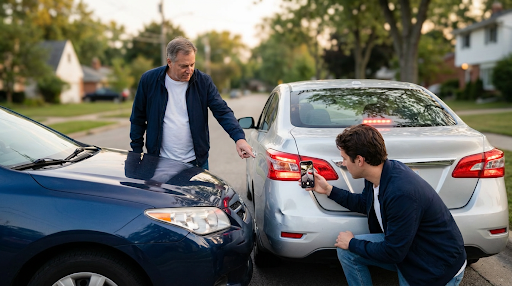
Take photos systematically, starting with wide shots of the entire scene, then close-ups of vehicle damage, license plates, and any damage inside the vehicles. You can use the same effective methods that professional investigators rely on: capture skid marks, road signs, traffic signals, weather conditions, and debris. Include timestamps if your phone allows it, and photograph the other driver’s insurance card and license for accuracy. Stay aware of traffic and your surroundings while taking photos—your safety comes first.
Building on your photo documentation, record immediate details in your phone while they’re still clear in your mind. Use voice memos or quick notes to capture vehicle speeds, traffic conditions, and exactly how the crash happened. Memory can fade within hours after a stressful accident, making these immediate observations incredibly valuable for your claim. The California Department of Insurance recommends noting visual obstacles, traffic controls, and any factors that contributed to the accident scene.
- Get Witness Names and Numbers
Neutral witnesses can make the difference between a quick settlement and a drawn-out dispute. When the fault isn’t clear, their account often helps clarify what happened.
- Ask politely for contact details – name, phone number, and a brief description of what they saw happen.
- Request a quick statement – even a 30-second summary of the collision can strengthen your position later.
- Use voice memos if they’re rushed – record their permission to contact them and their basic account.
- Get at least one witness – even a single neutral observer can break a liability tie for insurers.
- Note their location during impact – where they were standing or driving when the crash occurred matters.
If witnesses seem hesitant, that’s normal. A simple “Would you mind sharing your contact info in case insurance needs to verify what happened?” usually works. The official guidance from state insurance departments confirms that gathering witness details after an accident is a standard step that can protect your interests during the claims process.
- Notify Your Insurer Promptly
When you notify your insurance company after a collision, you’re protecting access to benefits that can ease immediate financial pressure. Most auto policies require timely notice of accidents, and delays can complicate coverage decisions or limit benefits like rental car reimbursement and medical payments. Before calling, gather your policy number, driver’s license, and basic accident details (location, time, other driver’s info). Then contact your insurer’s claims department as soon as it’s safe to do so.
During that first call, stick to the basic facts about what happened, where, and when, but avoid giving detailed recorded statements about fault until you understand your rights. Ask your claims representative about immediate benefits that might reduce your out-of-pocket costs right now. These can include medical payments coverage (med-pay), personal injury protection (PIP), rental car coverage, and towing reimbursement. Learning about first-party insurance benefits can help you access care and transportation while your claim is being processed.
- Get Checked by a Medical Professional
Even if you feel fine right now, seek medical attention after a car accident within 24 hours if you can. Concussion symptoms like headaches, dizziness, or confusion can appear hours or days later, and neck or back injuries often hide behind adrenaline. Early medical records create a clear timeline connecting your injuries to the crash, which strengthens your claim and protects your health.
If you’re worried about the cost of an ER visit or urgent care, remember that medical expenses are typically recoverable damages when the other driver is liable. Ask the billing department about payment plans or whether they can bill your auto insurance’s medical payments coverage directly. If you’re unsure about your options or need clarity on how medical bills work with claims, chat with ZAF’s free AI assistant to understand the process and know where you stand.
- Track Every Appointment and Expense
Each receipt and appointment record helps build your case and ensures you get reimbursed for expenses you’re worried about paying now. Tracking your medical care and costs creates a clear picture of how the crash affected your life and finances. If you have turned the case over to a lawyer, you only need to keep track of the medical facilities/providers where you were treated. The law office will handle all the detailed requests for medical bills and records.
- Save every medical bill, explanation of benefits, prescription receipt, and insurance statement from accident-related care.
- Log mileage to medical appointments using the IRS standard rate of 21 cents per mile, plus parking and toll fees.
- Document time missed from work with pay stubs, schedule screenshots, or employer letters showing lost wages and benefits.
- Keep a simple daily pain journal noting symptoms, limitations, and how injuries affect sleep, work, or family time.
- Photograph visible injuries as they heal and save copies of all treatment notes from doctors, physical therapists, or specialists.
Consistent documentation shows insurers you’re taking recovery seriously and validates the real impact of your injuries. ZAF’s AI assistant can help you organize these records into a clear case summary that strengthens your position in settlement discussions.
- Learn Your Rights Before You Sign Anything
Insurance adjusters may contact you quickly with settlement offers or requests for recorded statements, but taking time to understand your rights after a car accident protects you from making decisions you might regret later. You don’t have to accept the first offer or sign broad medical releases that give insurers access to unrelated health records. You also don’t need to provide detailed recorded statements without knowing how they might be used against you. State insurance departments make clear that consumers should never feel pressured to settle quickly, especially when injuries or the full extent of damages aren’t yet clear.
Your potential damages can include medical expenses, lost wages, pain and suffering, and property damage, though the specific types and limits depend on your state’s laws and the circumstances of your accident. Consumer protection agencies recommend documenting everything and asking insurers to explain their reasoning in writing before accepting any offer. ZAF’s AI assistant provides legal information to help you understand the claims process and your options, but specific legal advice about your situation comes from licensed attorneys who can review your case details and state-specific rights.
- Use Tech to Get Oriented Fast
After collecting photos, medical records, and insurance details, you might feel overwhelmed by what it all means for your claim. When you consult an AI-powered legal assistant like ZAF’s free tool, you can share your situation and get clear explanations about the claims process in plain English. The AI helps you organize everything into a case summary that shows where you stand and what your documentation supports, giving you confidence about next steps, whether you’re considering a DIY approach or wondering if you need attorney help.
ZAF’s AI provides guidance and information rather than specific legal advice, and it’s available 24/7 on your phone when you need answers outside business hours. The system flags situations where attorney involvement might benefit you while respecting your choice to handle things independently. You can start with the free AI assistant, request a no-cost consultation with an experienced attorney, or choose full-service representation with zero upfront fees—all based on what feels right for your situation and your family’s needs.
FAQs: Timelines, Costs, and Common Next Steps
After following the accident checklist, you likely have questions about deadlines, who covers medical bills while your claim is pending, and whether handling things yourself makes sense. These answers address the practical concerns that come up most often when navigating the claims process.
What are the typical deadlines to file a claim or lawsuit in my state, and what happens if I miss them?
Insurance claims should be filed promptly, often within days or weeks, per your policy terms. Lawsuit deadlines vary by state but typically range from one to six years. California courts require personal injury lawsuits to be filed within two years of the accident date. Check your state’s specific deadlines as they vary significantly. Missing deadlines may prevent you from recovering compensation.
Who pays for the ambulance, ER, and follow-up care if my claim is still pending?
Your health insurance typically covers immediate care, then seeks reimbursement from the at-fault driver’s insurer later. If you have Medicare, they may pay conditionally and recover costs from your settlement. Some auto policies include medical payment coverage that helps with upfront costs regardless of fault. This is typically called Personal Injury Protection, or PIP, for short. If you have PIP coverage, it is primary (it needs to be billed before health insurance will pay). Your health insurance and PIP carrier are both entitled to reimbursement from the at fault driver’s insurance policy.
Should I give a recorded statement to the other driver’s insurer, and what are the risks?
You’re not legally required to give a recorded statement to the other driver’s insurer. These statements can be used to minimize your claim or challenge your account later. If you choose to speak with them, stick to basic facts and avoid speculating about fault or injuries that may develop.
How do lost wages get documented if I’m paid hourly or work gig shifts?
Save pay stubs, timesheets, and bank deposits from before the accident to establish your earning pattern. For gig work, gather app earnings reports and tax records. IRS guidelines explain how different income types are documented and taxed in settlements. Your employer or platform can provide verification letters if needed.
When is DIY realistic, and when should I consider a free consultation with an attorney?
If an attorney is willing to take your case, it is usually a good idea to turn it over. You are highly likely to net more, even after paying attorney fees, than you would get on your own. On your own, you have no leverage to enforce the claim. DIY is generally not your best option, although it can work well for minor injuries with clear liability and cooperative insurers. Consider attorney consultation for serious injuries, disputed fault, multiple parties, or when insurers delay or make lowball offers. ZAF’s AI assistant helps you understand where you stand, and free consultations let you explore options without upfront costs.
You’re Not Alone—Choose the Support That Fits Your Life
Following these twelve steps protects your health, documents your case, and gives you a step-by-step path forward that puts the power back in your hands. Whether you’re worried about medical bills, missed work, or navigating insurance calls, you now have the foundation to make informed decisions about your claim.
You don’t have to navigate the claims process alone or commit to anything before you’re ready. Start with ZAF’s free AI assistant to understand where you stand and build a case summary you could use in settlement talks. If you decide you’d benefit from speaking with a personal injury attorney, free consultations are available with zero upfront fees. For those who need additional support, free legal aid organizations can also provide guidance based on your situation.Get the clarity you need to move forward with confidence—start your free assessment with ZAF Legal today.