
 800-503-2102
 Chat with ZAF
Can You Win a Pothole Bicycle Crash Claim Against the City?

Key Takeaways:
- You can win a claim against a city for a pothole bicycle crash, but only if you can show the city knew or should have known about the defect and failed to fix it in time.
- The strongest road-defect claims are built on records the city cannot easily dispute, like 311 complaints, inspection logs, repair history, and same-day photos before the pothole disappears.
- Short municipal notice deadlines can wipe out a valid claim long before a normal lawsuit deadline, so early documentation protects both your evidence and your options.
Cyclists hit potholes every day. Most never recover anything from the city, not because the hazard wasn’t real or the injuries weren’t serious, but because they didn’t know a filing deadline was already running from the moment they hit the ground. A pothole bicycle crash claim against the city turns on two things: whether the city had fair warning to fix a dangerous road defect before your crash, and whether you filed a formal notice before a window that can close in as little as 30 days. Start your free bicycle accident assessment to understand where your case stands.
What Evidence Shows the City Knew
Proving a pothole caused your crash is the easy part. Cities rarely dispute that a defect existed. What they contest is whether they knew about it, or should have known, with enough time to make repairs before you hit it. Both elements are required, and closing that gap is where most municipal claims succeed or fail.
Here is what that evidence typically looks like:
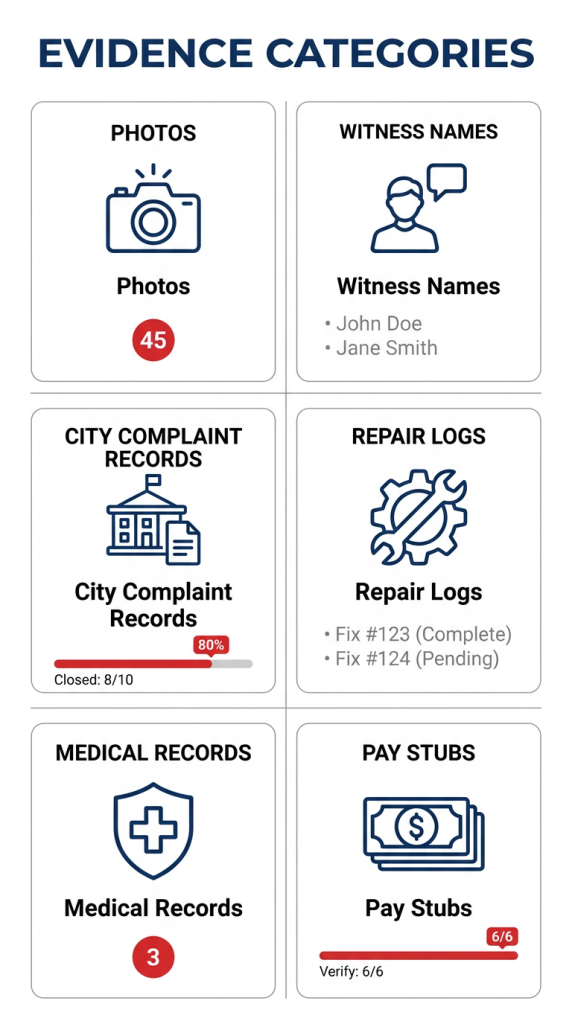
- Prior complaints and service requests carry real weight. If someone filed a 311 report, submitted a SeeClickFix request, or contacted a municipal public works department about that specific pothole before your crash, that record can establish the city had notice of the defect and still failed to act.
- City inspection and repair records can show how long the defect existed. If the city’s own logs show a prior repair attempt, a flagged inspection, or a work order that was never completed, that history is often more persuasive than any eyewitness account.
- Photos taken at the scene as soon as possible are some of your most time-sensitive evidence. Capture the pothole’s depth, width, and location relative to the bike lane or road edge, and photograph your bike and injuries the same day. Cities sometimes fill potholes quickly after a crash, which can erase the physical record you need.
- Proof the defect had been there long enough matters when no complaint exists. Agencies like UDOT recognize that timely repair after agency awareness is a standard for liability, which means showing the pothole was visible and longstanding can substitute for a formal complaint in some jurisdictions.
- Medical records and any wage-loss documentation round out the picture. They confirm the crash caused real, measurable harm, not just that a pothole existed, and they become the foundation for valuing what you lost, from the ER visit you were afraid to schedule to the shifts you missed while you recovered.
If you are in a city like New York, filing a 311 service request is not legally required but is strongly recommended as a contemporaneous record that shows the city was put on notice. Whatever your city’s system, the goal is the same: create a paper trail that ties the city’s awareness directly to the defect that hurt you.
Why City Notice Deadlines Change Everything
Even when the evidence clearly shows a city pothole caused your bicycle crash, a missed municipal notice deadline can end your claim before it begins. Understanding how these deadlines affect a pothole bicycle crash claim against the city is often the difference between recovering what you lost and walking away with nothing.
These Deadlines Are Not Like a Normal Statute of Limitations
Most personal injury claims give you years to file. Municipal claims are different. Many cities require written notice of your intent to sue within 30 to 180 days of the crash. Miss that window, and the city can have your claim dismissed regardless of how clear the road defect was.
Waiting Costs You Leverage
Waiting feels reasonable; for the city to respond, for your injuries to stabilize, for the shock to clear. But that waiting eats directly into the one window that determines whether your claim survives at all. The notice deadline doesn’t pause while you recover or sort through insurance paperwork, and it doesn’t care that you didn’t know it existed.
Getting Organized Early Protects More Than Your Claim
Because these cases move fast, documenting the scene and gathering records early is the most practical thing you can do right now. This protects your claim while you work through treatment and lost income. As for medical bills, they are typically covered first by PIP or MedPay coverage, then by health insurance, with provider liens available if needed, so out-of-pocket costs are often lower than you expect while your claim is still pending.
Can You Sue the City for a Pothole Bicycle Crash?
You can sue the city for a pothole bicycle crash, but liability depends on what the city knew, when it knew it, and whether you filed a claim on time. The answers hinge on specific legal standards, not just the existence of a dangerous road defect.
Can I sue the city for a bicycle crash caused by a pothole?
Yes, but the legal bar is higher than a standard injury claim. You generally need to show that the road defect was dangerous, the city had notice of it, and you filed a claim on time. Massachusetts law and California’s Caltrans standards both frame liability around notice and a reasonable repair window, not just the existence of a pothole.
What if the city says it did not know about the pothole before the crash?
That defense is common, but “constructive notice” can counter it. If the pothole was large, visible, and present long enough that a routine inspection should have caught it, the city may be held responsible even without a formal prior complaint. Repair records and inspection logs are the evidence that often settle this question.
Does it hurt the claim if the city repairs the pothole after the crash?
Not necessarily. Post-crash repairs can actually suggest the city acknowledged a problem existed. Document the defect with photos and measurements before any repairs are made, since the physical evidence can disappear quickly. Once the road is patched, your photos and any pre-repair witness statements become the record.
How long do I have to file a claim against the city?
Deadlines vary by location and are often much shorter than standard injury statutes of limitations. In Los Angeles, for example, personal injury claims against the city must be filed within six months of the incident. Missing that window can end the claim entirely, regardless of how strong the evidence is.
What if the road is a state highway, not a city street?
The responsible agency changes, and so does the process. State-managed roads are handled by the relevant transportation department rather than the local city hall. Identifying who owns and maintains the road where you crashed is one of the first steps in knowing where to direct your claim.
Get Clarity Before You Decide How to Proceed
Pothole claims against a city are winnable, but they hinge on notice, timing, and proof. Deadlines like NYC’s 90-day window or South Bend’s 180-day limit can close a valid claim before you’ve finished treating your injuries. Acting early is the only way to keep your options open.
In a standard injury claim, you have time to learn as you go. In a claim against a city, the procedural clock starts running before you’ve finished treating your injuries. ZAF Legal’s free AI legal assistant helps you understand whether you have a case, what it might be worth, and whether an attorney is likely to improve your net outcome, so you’re not piecing that together after a deadline has already passed. Most people with valid claims net more with professional representation, even after fees. If you want more hands-on support, the DIY bundle (starting around $49.99) includes an attorney consultation and case summary help, and that payment is refunded if you later switch to full-service representation.
Start your bicycle accident claim assessment; the earlier you understand where you stand, the more options you’ll have before any municipal deadline passes.
This content is for informational purposes only and does not constitute legal advice, and reading the content does not create an attorney-client relationship.