
 800-503-2102
 Chat with ZAF
What Should I Do Immediately After a Dog Bite? A Step-by-Step Guide

Key Takeaways:
- Take immediate steps to clean and care for a dog bite, seek medical attention—even for minor wounds—and document everything to protect your health and legal rights.
- Reporting the incident, gathering evidence, and understanding insurance options are crucial for a strong injury claim and often do not require confronting the dog owner personally.
- ZAF Legal’s free AI assistant helps you determine if you have a case, estimate its value, and decide whether to proceed independently or with an attorney—empowering you to make informed choices without upfront costs.
A dog bite can catch you completely off guard, and knowing where to start can feel overwhelming. Knowing what to do immediately after a dog bite, including wound care, can protect your health and matter if you seek compensation later. ZAF Legal’s free AI assistant helps you understand whether you have a case and what it might be worth.
Dog Bite First Aid and Wound Care Questions
A dog bite can happen in seconds, and the shock of the moment makes it hard to think clearly about what to do next. The answers below cover the most important dog bite first aid steps — from cleaning the bite to knowing when to get professional care — so you can act with confidence.
What should I do in the first few minutes after a dog bite?
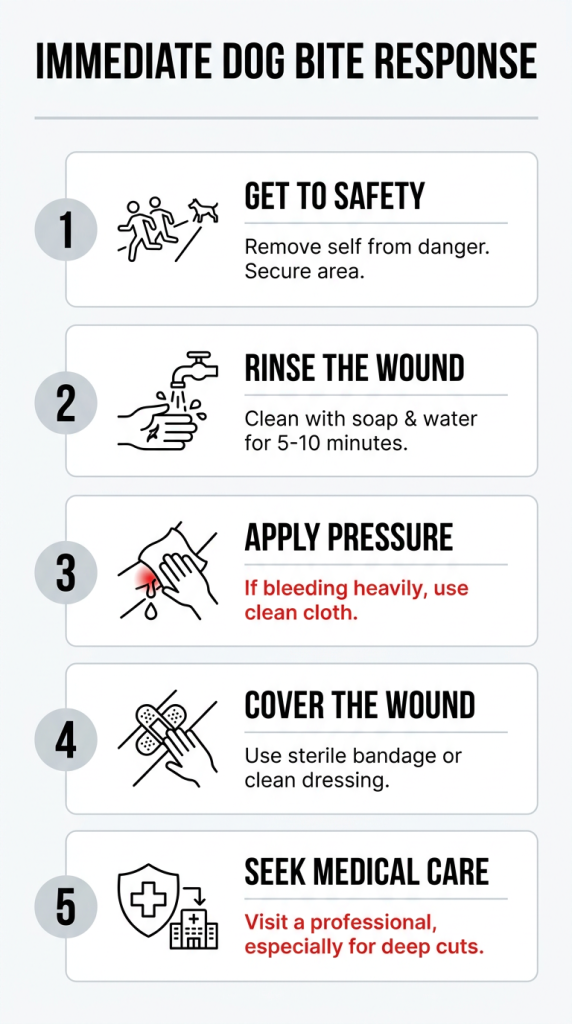
Basic dog bite first aid starts with getting away from the dog and moving somewhere safe. Then rinse the bite under clean running water for several minutes, apply gentle pressure if it’s bleeding, and cover it. CDC guidance confirms that thorough washing is one of the best things you can do in those first moments.
How do I clean a dog bite wound at home before seeing a doctor?
Rinse the bite under running water for at least five minutes. Use mild soap around the edges — not inside. The Mayo Clinic recommends applying antibiotic ointment and covering it with a clean bandage before heading to a doctor or urgent care.
What should I avoid doing after a dog bite?
Don’t seal the bite shut at home — that traps bacteria inside. Avoid hydrogen peroxide or iodine in the area, as both can damage healing tissue. Don’t skip care over cost concerns either. Medical expenses from a dog bite can often be covered through insurance — understand your options before assuming you’ll pay out of pocket.
When is a dog bite serious enough to go to urgent care or the ER?
Go immediately if the bleeding won’t stop, the bite is deep, or it’s on your face, hands, or near a joint. You should also get evaluated if you’re unsure about the dog’s vaccination history — because rabies exposure needs to be ruled out quickly. CDC rabies guidance explains when post-exposure treatment is needed.
Do small puncture wounds really need a doctor’s attention?
Yes — even if the bite looks minor on the surface. Dog teeth can push bacteria deep into tissue. Small punctures are more prone to infection than larger cuts because the skin closes over the opening. A doctor can assess whether you need antibiotics, a tetanus booster, or a rabies evaluation.
Dog Bite Infection Signs and Medical Follow-Up Questions
Even a wound that looks minor at first can develop complications in the days after a dog bite. Knowing the warning signs of infection — and what doctors often recommend — can protect both your health and your claim. And if cost is holding you back from following up, there are options that can keep out-of-pocket expenses near zero.
What are the most common signs of dog bite infection to watch for?
The most common dog bite infection signs include redness spreading beyond the wound, warmth, swelling, pus, or red streaking along the skin. A fever, chills, or increasing pain are also warning signs. Any of these changes warrants a call to your doctor the same day.
How quickly can signs of a dog bite infection appear?
Research shows that redness, swelling, and spreading pain can appear within 48 hours — faster than most people expect. Certain bacteria, like Capnocytophaga, can take up to 14 days to cause symptoms. Checking the wound daily for at least two weeks is a good precaution.
Will a doctor recommend antibiotics, a tetanus shot, and a rabies evaluation?
Often, yes — your doctor may recommend antibiotics, a tetanus booster, or a rabies evaluation, and sometimes all three. Clinical guidance supports prescribing antibiotics for most dog bites, especially on the hands or face. Your doctor will check your tetanus status and the dog’s vaccination history as well.
If I’m worried about cost, how do medical bills get paid while my claim is still open?
Beyond the medical side, cost shouldn’t stop you from getting follow-up care. If the dog owner’s insurance includes MedPay, it can pay your provider directly; if not, your health insurance steps in to cover treatment costs. Without health insurance, many providers will treat you under a lien, collecting payment from your settlement — not from you upfront.
Why does follow-up care matter even when the wound looks like it’s healing?
Some injuries look better on the surface before the tissue underneath has fully healed. Scarring, nerve damage, and reduced function can worsen without proper treatment, and these outcomes can increase the value of your claim. A clear medical record from follow-up visits can be one of the strongest pieces of evidence if you pursue compensation.
Reporting a Dog Bite and Protecting a Dog Bite Injury Claim
Reporting a dog bite and documenting what happened can feel uncomfortable — especially when the dog’s owner is someone in your community. But reporting the bite, gathering information, and documenting the injury right away protects your health and your ability to seek compensation.
Should I report the dog bite to animal control or the police?
Yes — contact your local animal control agency or non-emergency police line as soon as possible. Reporting a dog bite creates an official record that can support a future claim. Animal control also tracks bite history, which matters if the dog has bitten someone before.
If the dog owner is my neighbor, does filing a claim mean going after them personally?
In most cases, no. Dog bite claims usually go through the owner’s homeowner’s or renter’s insurance — not their personal savings. You are asking their insurance company to cover your losses, not your neighbor directly. If you’re unsure how this works or whether you have a claim, ZAF’s dog bite case checkup can help you get your bearings.
What information should I collect from the dog owner and witnesses?
Get the owner’s name, phone number, and address. Ask for their homeowner’s or renter’s insurance information if they’re willing to share it. Collect contact details from any witnesses before they leave. Write down everything you remember about how the bite happened as soon as possible.
What photos and records should I keep after a dog bite?
Beyond what you gather at the scene, photograph the wound right away and continue taking photos over the following days and weeks. This matters most if there is bruising, swelling, or scarring. Visual evidence of how the injury progressed can make a meaningful difference in your dog bite injury claim. Keep all medical records and bills as well.
What happens if I wait to report the bite or delay getting treatment?
Delays can make a claim harder to prove. Without a formal report or early medical records, an insurer may question your injury’s severity or dispute how the bite happened. Most states also have a statute of limitations on personal injury claims — a deadline after which you can no longer file. The sooner you act, the stronger your position.
What to Do After a Dog Bite if You Are Worried About Insurance, Costs, or Hiring a Lawyer
Money worries and relationship concerns are often what stop people from taking action after a dog bite — not lack of injury. In a dog bite injury claim, knowing how insurance and legal options actually work gives you a clearer picture of what to do next.
Does filing a dog bite claim mean I’m suing my neighbor or damaging our relationship?
Not necessarily. Most dog bite claims start as an insurance claim against the owner’s homeowner’s or renter’s policy — not a lawsuit. Many dog owners are relieved to know their insurance handles it. Filing a claim puts the insurance company in the middle — that’s what the coverage is there for.
Can I get care now even if my claim won’t be resolved for months?
Yes. There are several ways medical costs get handled while a claim is open — none requiring you to pay out of pocket and wait. A provider lien, for example, is when your medical provider waits to collect from your settlement rather than billing you now. Treatment doesn’t have to wait for the claim to close.
When does it make sense to get legal information before deciding whether to hire an attorney?
Earlier than most people think. Getting legal information early in a dog bite injury claim helps you make better decisions before anything is set in stone. It can also help you avoid common missteps, like accepting a quick settlement before knowing what your claim is worth.
How do scarring and disfigurement affect the value of a dog bite injury claim?
More than most people expect. Permanent scarring — especially on visible areas like the face, hands, or arms — is often the largest component of a dog bite case. The more visible and lasting the scar, the more compensation may be available.
What if I want to understand my options without committing to a lawyer right away?
That’s exactly what ZAF’s AI legal assistant is built for. Most people with valid claims net more with an attorney, even after fees. ZAF’s AI can help you understand whether that’s likely true for your situation. Start with the free case checkup — no cost, no commitment.
Get Clarity on Your Next Step After a Dog Bite
Getting medical care quickly and documenting what happened are the right first moves — CDC guidance confirms it. Now the question is what your options are.
ZAF Legal’s free AI assistant is a good place to start if you’re still weighing what to do after a dog bite. It helps you understand whether you have a case and what it might be worth. It also helps you see whether an attorney would likely net you more after fees — so you’re making an informed choice, not a guess.
Find out where you stand — start your free dog bite checkup. No commitment required.
Disclaimer: This content is for informational purposes only and does not constitute legal advice, and reading the content does not create an attorney-client relationship.
