 800-503-2102
 Chat with ZAF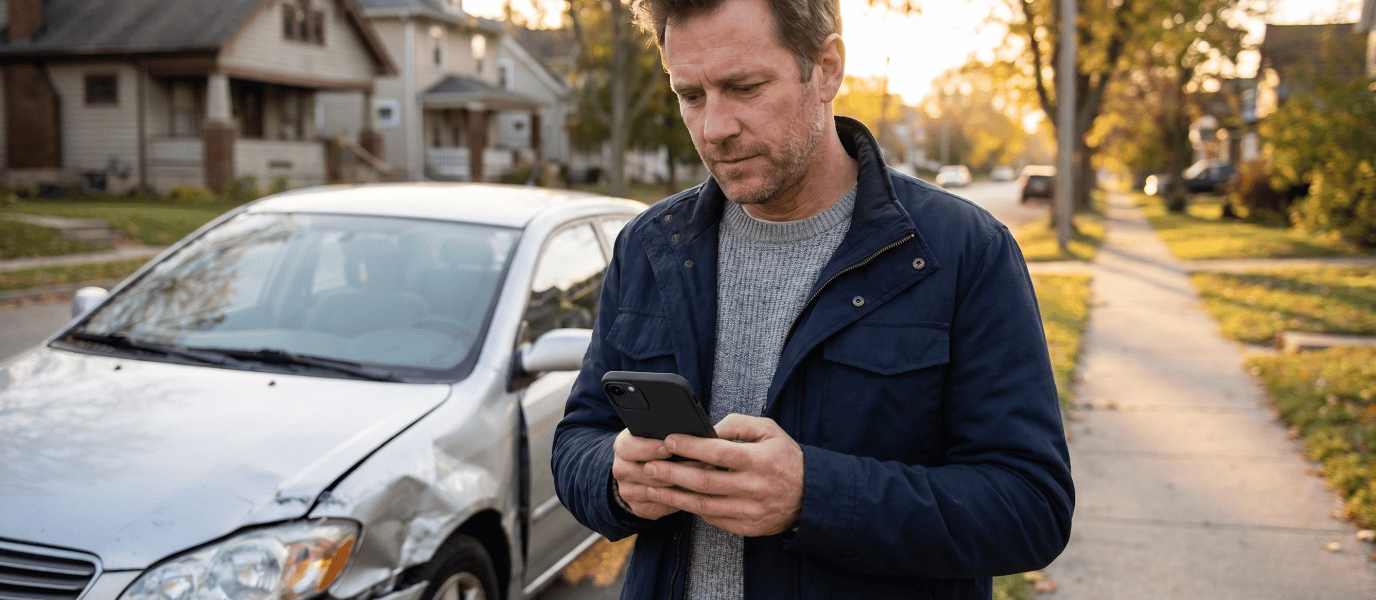

Key Takeaways:
- Collecting clear, timely evidence at the scene—such as photos, witness details, police report info, and documentation of road and weather conditions—can significantly strengthen your car accident claim.
- You don’t need perfect evidence; focusing on safety and gathering what you can is most important, and missing some details does not doom your claim.
- ZAF Legal’s AI assistant can help you assess your case, understand its potential value, and decide whether to handle your claim independently or seek attorney support.
After a crash, your mind goes straight to the bills. Will the ambulance ride create a debt you can’t pay? Will missing work mean falling behind on rent? Those fears are real. But a few clear details collected at the scene can make a meaningful difference when an insurer reviews your claim.
The good news is you don’t need perfect evidence. Consumer guidance on accident documentation shows that clear proof gathered early is often what insurers rely on most. A short checklist of evidence to collect at the scene of a car crash, gathered safely, can help show what happened. It can also support your injury-related losses and reduce disputes. Start ZAF Legal’s car accident claim assessment for free and find out what your case could be worth.
What Counts as Useful Evidence at the Scene of a Car Crash?
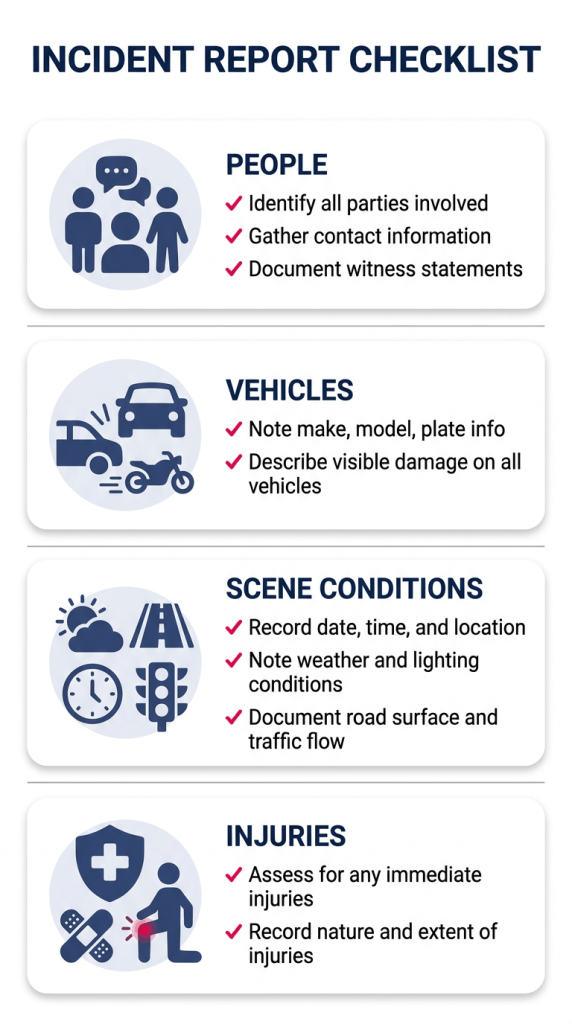
Scene evidence covers four things: who was involved, what happened, what conditions existed, and what injuries or damage were visible right away. Think of it as a snapshot before anything changes, capturing vehicle positions, road markings, weather conditions, and how the vehicles came to rest. NHTSA investigators rely on exactly these details, including skid marks, point of impact, and photographs, when reconstructing how crashes unfold.
That evidence is most useful when collected right after the crash. Vehicles get moved, memories shift, and video footage can be deleted within hours. New York State Police collision reconstructors warn that physical evidence like tire marks, debris, and pavement damage can change or disappear quickly. You don’t need to collect everything perfectly, especially if you’re shaken up. Focus on safety first, then collect the details that can fade or vanish before you get another chance.
1. Take Photos of Vehicle Damage From Multiple Angles
Your phone camera can do a lot of work for you after a crash. Insurance companies sometimes minimize damage when only one or two photos of vehicle damage exist, so shots from a few different distances give a much fuller picture of what actually happened.
- Start wide, then move in. Take a full-view shot of each vehicle from a distance, then a mid-range shot, then close-ups of the damaged areas. This is the same layered approach crash investigators use when documenting collisions, and it works for the same reason: one angle rarely shows the full picture.
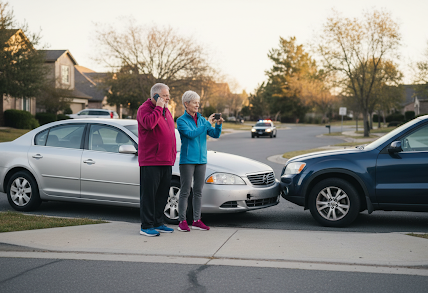
- Capture vehicle positions before anyone moves the cars. The way the vehicles are sitting after impact can show the direction and force of the collision. Once vehicles are moved, that context is gone, so photograph positions as soon as it is safe to do so.
- At close range, look for the specific damage. Crumpled panels, broken lights, fluid leaks, and visible frame damage are harder to dispute than a general shot of a dented bumper. These details are what insurers and attorneys look at when evaluating how serious the impact was.
- Photograph deployed airbags, skid marks, and any objects the vehicles struck. These details get cleaned up quickly, and they help show the force and direction of the impact. For more on what to capture, these accident scene photography tips are a helpful reference.
2. Exchange Insurance and Contact Information Without Arguing About Fault
When you exchange insurance and contact information, accuracy matters more than speed. You need each driver’s full name, phone number, address, insurer name, and policy number. Photograph their insurance card and license rather than writing details by hand, since one wrong digit on a policy number can slow your claim. Insurance regulators recommend collecting all of this before anyone drives away. If the other driver refuses to share their information, note their license plate and wait for the police report to fill in the gaps.
Once you have what you need, step back from the conversation. Insurance adjusters can use anything you say at the scene against your claim later. Texas’s insurance regulator advises against admitting fault or signing any statements at the scene. Staying calm and sticking to the facts protects your claim far better than winning an argument on the side of the road.
3. Get the Police Crash Report Number and Officer Information
When police respond to a crash, the police crash report is often one of the first documents an insurance company pulls. A few details collected before you leave the scene can save you a lot of time when you need to request that report later.
- Ask the officer for the report or incident number before they leave. The Maine State Police notes that this number is one of the most useful pieces of information when ordering the official report later.
- Write down the officer’s name, badge number, and the responding agency, whether that is city police, a county sheriff, or state patrol. Georgia’s insurance regulator recommends collecting all three at the scene.
- Photograph the officer’s business card or badge number directly on your phone. It takes seconds and is more reliable than trying to read handwritten notes later.
- If the officer does not assign fault at the scene, that is completely normal. It does not weaken your claim; it just means the other evidence you are collecting will carry more weight.
- Most police crash reports are not available immediately. Knowing the report number and agency name before you leave the scene means you can request it online or in person without unnecessary back-and-forth.
- If no officer responds to the scene, note the non-emergency line for the local precinct so you can file a report yourself afterward.
4. Ask for Witness Statements and Contact Details Before They Leave
When two drivers give conflicting accounts of what happened, a neutral bystander’s version often carries more weight with insurance adjusters than anything either driver says. People who saw the crash but had no part in it have no reason to favor either side, which makes their accounts some of the most credible evidence you can bring to a claim.
- Approach any bystanders quickly and ask what they saw, because people tend to drift away once things feel settled.
- Collect full names and phone numbers from every witness. Gathering witness statements and contact details at the scene is one of the most important steps you can take after a crash, according to the California Department of Insurance.
- Ask the witness to describe what they saw, then record a short voice memo or video on your phone if they agree. A brief recording is harder to misremember later than a handwritten note.
- Let the responding officer know who the witnesses are so their names appear in the police report. That gives the information an official record that is harder to dispute later.
- One neutral witness can change the direction of a disputed claim, even when fault seems impossible to prove. Witnesses with no connection to either driver tend to be viewed as especially credible by adjusters, particularly when both drivers are telling very different stories.
5. Document Road and Weather Conditions Before They Change
Road and weather conditions at a crash scene can change within minutes. Rain dries up, debris gets swept away, and standing water drains long before anyone investigates. Capturing traffic signals, lane markings, construction zones, and visibility issues right away gives your claim important context. If you cannot photograph everything, a quick phone note about glare, wet pavement, or a blocked sign still preserves details that matter.
Documenting these conditions is not about finding excuses. Road conditions alone do not determine who caused a crash. A pothole or faded lane marking does not excuse careless driving, but it can help explain how the collision unfolded. As one practitioner guide on crash evidence notes, details like standing water or poor visibility can be gone within the hour. Getting those details documented early gives your claim a stronger foundation.
6. Photograph Visible Injuries and Seek Medical Care Early
If you have visible injuries after a crash, photograph them before anything else. Bruising, cuts, swelling, and seat belt marks can fade within hours, so timing matters. Research on documenting crash injuries recommends starting with a wider shot and moving to close-up detail. Combining visible injury photos with early medical documentation gives insurers and attorneys a clearer, harder-to-dispute account of your injuries.
Getting your medical documentation started means seeking care, and if the ER cost is your first concern, that makes sense. You are not alone. CDC data show that 3.8 million people visit emergency departments for crash injuries each year, many of whom are worried about the same costs you are weighing. If you have PIP or MedPay (personal injury protection or medical payments coverage), those cover your bills first, regardless of fault. If not, your health insurance steps in next. Many providers will also treat you under a lien, collecting from your settlement later, so your out-of-pocket cost stays at zero.
7. Preserve Dashcam Footage Before It Gets Overwritten
If your car has a dashcam, that footage could be one of the most objective records of what happened, and saving it takes less than a minute. Dashcam footage captures vehicle speed, lane position, traffic signals, and driver behavior without anyone’s memory filtering it, and that objectivity can make a real difference when insurance companies start pushing back on what happened.
- Save the file immediately. Most dashcams use loop recording, which automatically overwrites older files as new footage is recorded. Save it before you leave the scene. Do not assume it will still be there later.
- Use your dashcam’s lock or protect function. Many models allow you to flag or lock a clip so it does not get overwritten during the next recording cycle. Check your dashcam’s manual or settings menu if you are not sure how.
- Copy the footage to your phone or another device as soon as you can. Removing the SD card and storing it separately is a reliable backup option.
- Check whether your dashcam backs up to the cloud. Many newer models automatically save footage, so your clip may already be stored even if the SD card is overwritten.
- Even partial dashcam footage matters. If the camera did not capture the moment of impact, footage from the seconds before a crash can still show lane changes, braking behavior, or signal use — details that help fill in what happened.
- Note whether the other vehicle had a dashcam visible on its windshield. You may not be able to access that footage yourself, but noting it in your records means it can be formally requested later, before the recording gets overwritten.
8. Look for Surveillance Video From Nearby Businesses or Homes
Surveillance video from nearby businesses, gas stations, or apartment buildings can capture the crash without either driver’s account influencing what it shows. Many systems overwrite footage within days if no one asks for it. You don’t need to download anything yourself at the scene. Just note the business name, address, and which direction the camera is pointing. That information is enough for an investigator or attorney to send a preservation request before the footage disappears.
When drivers tell different stories about who had the right of way, outside video often settles the question. Some cities have created camera registries or registration programs that help law enforcement quickly identify and contact nearby camera owners after a crash. If you spot a camera but can’t get access to the recording, writing down the location is enough for now. That record could lead to the clearest, most neutral account of what actually happened.
9. Record License Plate Numbers and Vehicle Identifiers Accurately
Getting accurate license plate numbers and vehicle details at the scene takes less than a minute, but a single wrong digit or letter can make it nearly impossible to track down the other driver later. Photograph plates directly rather than writing them down.
- Take multiple photos of each plate from different distances in case one image is too dark or blurry to read. Pair each plate photo with a shot of the vehicle’s make, model, and color as a backup identifier, as California’s insurance guide recommends.
- If you see a company name, logo, or DOT number on a vehicle, photograph it. Commercial vehicles often carry separate fleet insurance, which changes who you file a claim against.
- Capture any visible bumper damage or distinctive features on the other vehicle. Unique markings add another layer of identification, as recommended by on-scene guidance from the Insurance Information Institute.
- In multi-vehicle crashes, document each car separately because disputes about positioning and fault are common. Official crash guidance recommends capturing identifying details for every vehicle involved.
- If a driver appears ready to leave, prioritize getting the plate number above everything else. A partial plate paired with make, model, and color still gives investigators a real starting point, and if they leave before you can get it, flag the responding officer immediately.
- Your phone automatically timestamps and geotags every photo, tying each image to a specific time and location. That metadata can help establish the sequence of events if the crash is disputed later.
10. Save Scene Timestamps and Location Details on Your Phone
It’s easy to focus on the bigger pieces of evidence and overlook what ties them all together. Scene timestamps and location details connect your photos, videos, and notes to the same event, making your evidence easier to organize and harder to question later.
- Open your phone’s notes app right away and record the exact intersection or address, the direction you were traveling, the date, and the time before you leave the scene.
- Add nearby landmarks, such as business names, traffic signals, or mile markers, to your notes, as these help confirm the location if GPS data is unclear when your files are reviewed later.
- Confirm your phone’s location services are on before photographing the scene. Smartphone photos automatically embed timestamp and GPS data, but this metadata is not always visible when images are transferred or shared, so a written note is a reliable backup.
- Save original image files rather than screenshots or edited copies, since editing can strip the location metadata that investigators and insurers use to verify when and where a photo was taken.
- Keep a running note of scene timestamps and location details for each piece of evidence you collect, because a simple record like “photos taken at Oak Street and 5th Avenue at 3:47 PM” can help reconstruct the crash timeline if questions come up later.
These small details are easy to overlook in the moment, but they are often exactly what helps tell a clear, complete story of what happened.
FAQ About Evidence to Collect at the Scene of a Car Crash
After a crash, working through a car crash evidence checklist is only part of the picture. When you’re hurt, overwhelmed, and calculating how to keep up with bills, the questions that feel most urgent aren’t always about what to photograph. Some of the biggest concerns are about what happens when things don’t go perfectly, and what to do about medical costs when money is already tight.
What if injuries or shock make it impossible to collect all the evidence at the scene?
Your health comes first, always. If you couldn’t gather much at the scene, that doesn’t mean your claim is in trouble. Investigators and attorneys can often piece together what happened using traffic camera footage, medical records, or accident reconstruction. Focus on getting care, not on what you missed.
Can a claim still succeed if there are no witnesses or no police report?
Yes, many successful claims are built without either one. Medical records, photos, and the other driver’s own statements can carry real weight with insurers. What matters most is a clear, organized record of what happened and how the crash affected you physically and financially.
Should photos, videos, and medical records be shared directly with the insurance adjuster right away?
Not right away. Insurance adjusters are working to settle your claim for as little as possible, and sharing evidence without guidance can cost you. ZAF’s AI can help you understand what adjusters often ask for and how to respond before you hand anything over.
What if there is no PIP or MedPay, and medical treatment feels too expensive to afford?
Worrying about cost is one of the most common reasons people delay care. If PIP or MedPay isn’t available, your health insurance may cover treatment upfront. Your insurer can later recover those costs from the at-fault driver’s insurance, not from you. Without health insurance, some providers treat you under a lien, with nothing owed out of pocket until your case settles.
How can ZAF’s AI help me understand whether I have a case and whether an attorney would net me more?
ZAF’s free car accident claim assessment helps you understand whether you have a case and what it might be worth. It also helps you see whether an attorney would result in more money in your pocket, even after attorney fees. From there, you can decide what level of support makes sense for your situation.
The Best Evidence Is the Evidence You Preserve Early
What you collect in those first minutes matters more than most people realize. Vehicle positions, road conditions, and other scene details can change quickly. A car accident evidence checklist gathered early protects the facts and supports your claim.
Once you have that foundation, ZAF Legal’s AI assistant helps you understand whether you have a case and what it’s worth. It also shows whether an attorney would likely net you more. If you choose to manage your own claim, it can help you build a case summary that could serve as a settlement demand.
Start a free car accident claim assessment with ZAF Legal to find out what your evidence could support. Schedule a consult today.
Disclaimer: This content is for informational purposes only and does not constitute legal advice, and reading the content does not create an attorney-client relationship.