 800-503-2102
 Chat with ZAF

Key Takeaways:
- A motorcycle crash can be medically and financially serious even when the bike damage looks small, because low-speed impacts often cause delayed injuries that do not show up at the scene.
- A minor motorcycle claim is worth more than repair costs, and accepting a quick settlement before treatment is complete can leave you paying for missed work, future care, and reimbursement claims out of your recovery.
- You do not have to guess between DIY and hiring a lawyer: start by finding out whether you have a case, what it might be worth, and whether representation is likely to improve your net result before you sign anything.
Your bike has a few scratches, you rode away, and the other driver is apologizing. It feels small. The insurer calling tomorrow is counting on that feeling, because riders who assume a crash was minor are the easiest to settle with cheaply, before symptoms surface, before treatment is complete, and before they know what they could have recovered. Vehicle damage tells you how the bike held up. It tells you almost nothing about what the crash will actually cost you.
Before you decide to handle a claim yourself or sign anything an insurer sends over, the smarter first move is to understand whether you have a case, what it might realistically be worth, and whether a lawyer is likely to put more money in your pocket, even after fees. ZAF Legal’s free AI assistant helps riders get that clarity without any upfront cost or pressure. Start your free claim assessment.
When a “Minor” Crash Is Not Really Minor
Vehicle damage is a poor proxy for injury severity, especially on a motorcycle, where your body absorbs impact in ways a car simply doesn’t. These questions address what riders often don’t realize until days after the crash, when the real picture starts to come into focus.
Can a low-speed crash still cause serious injuries?
Yes. Low-speed impacts can still jolt your neck, compress your spine, or cause a concussion. The adrenaline that gets you back on your feet at the scene can mask real pain for hours or days. Feeling okay immediately after is not a reliable sign that you are okay.
What hidden injuries after a motorcycle accident make a claim more serious than the bike damage suggests?
Soft tissue injuries, herniated discs, nerve damage, and traumatic brain injuries are all common and often invisible on the scene. These conditions can worsen over days or weeks. They also tend to be the most expensive to treat, which is exactly why insurers prefer to settle before a full diagnosis is made.
How long should I watch for symptoms before assuming everything is fine?
Most doctors recommend monitoring for at least one to two weeks. Headaches, numbness, tingling, stiffness, or trouble concentrating can all signal something that needs attention. If any of those appear, see a doctor, and don’t assume your window to make a claim has closed.
If I’m worried about medical bills, how does treatment get paid while my claim is still pending?
You likely won’t have to pay out of pocket while your claim resolves if you have PIP or MedPay coverage, which pays first. Health insurance picks up next, with the right to seek reimbursement from the at-fault party’s insurer later. If neither applies, many providers treat on a lien, meaning they get paid from your settlement, not from your wallet today.
What should I document in the first days after the crash?
Write down every symptom as it appears, even if it seems minor. Photograph any visible injuries as they develop. Save every medical record, bill, and receipt. Hold on to pay stubs if you miss work. This paper trail protects your claim if symptoms worsen and the insurer later questions whether your injuries were crash-related.
How Much Is a Minor Motorcycle Claim Worth?
Motorcycle accident claim value is rarely about what your bike looks like after a crash. It’s about what the crash costs you, and those costs often keep appearing weeks after you’ve ridden home.
What actually goes into a motorcycle accident claim?
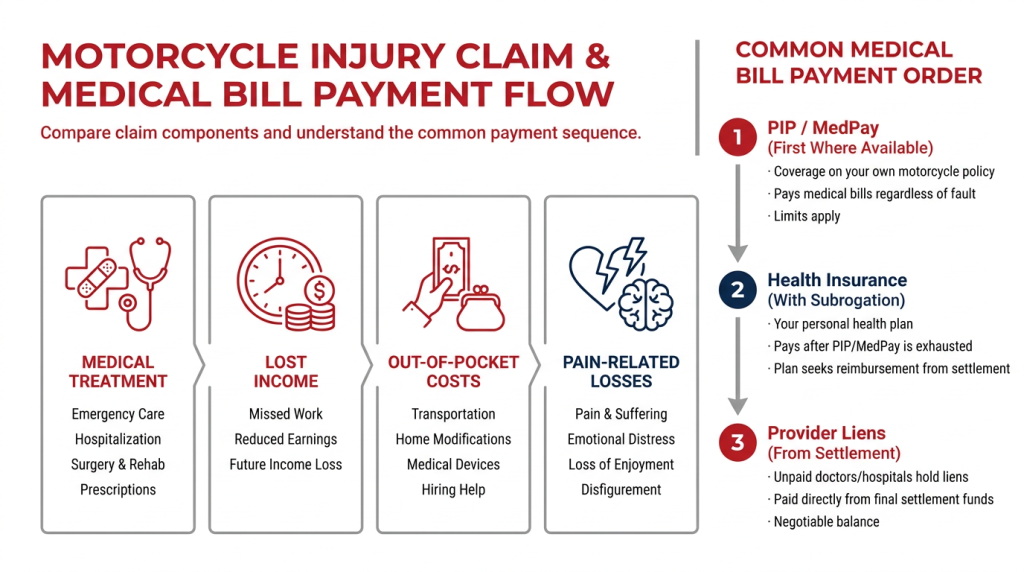
A claim covers more than repair costs. Medical treatment, lost wages, out-of-pocket expenses, and pain-related losses all factor in. Even a seemingly small crash can generate real economic damage if you miss shifts, need follow-up care, or develop symptoms that take time to surface.
Why do early insurance settlement offers often fall short?
Insurers move fast, sometimes before you know the full extent of your injuries. An offer made before your treatment is complete won’t account for future medical costs or wage loss. Signing a release early permanently closes your claim, even if your symptoms worsen next month.
Should I accept a quick settlement before I’m done with treatment?
No. Settling before you reach maximum medical improvement means accepting a number that may not cover what comes next. Once you sign, you can’t reopen the claim. Wait until your treatment is complete, or at least until you understand the full picture.
How do PIP, MedPay, health insurance, and provider liens affect my settlement?
These sources cover your care while your claim is pending, helping keep your out-of-pocket costs low. The order typically works like this: PIP or MedPay pays first, where available, then health insurance steps in with subrogation rights, and providers may treat on a lien paid from your eventual settlement. Each source that paid into your care may have a right to reimbursement, which affects your net recovery and is one reason claim value is more complex than it appears.
Does having health insurance reduce what I can recover?
Not necessarily. Your settlement should still reflect the full value of your medical bills and losses. What changes is where the money flows after settlement; your health insurer may recover what it paid through subrogation. Understanding how these pieces interact is part of knowing what your claim is actually worth before you accept anything.
When Hiring a Lawyer Usually Makes Sense
Most riders who handle their own claims don’t realize they’re making a permanent decision with incomplete information. The situations below are the ones where the gap between what you know and what the insurer knows is most likely to cost you.
If the crash looked minor and liability seems obvious, do I still need an attorney?
Not always, but “seems obvious” is doing a lot of work there. Insurers routinely dispute fault or argue that your injuries were pre-existing, even when the other driver ran a red light. Knowing when to hire a motorcycle accident lawyer often comes down to how the insurer responds, not how the crash looked.
What situations make DIY noticeably riskier?
A few red flags can quickly shift the risk: delayed or worsening symptoms, more than one insurance policy involved, a recorded statement request from the other driver’s insurer, or a fast settlement offer before your treatment ends. Any one of these signals that the insurer is managing its exposure, and you should be managing yours.
I’m worried about giving up part of my settlement in attorney fees. Is representation still worth it?
For most valid injury claims, yes. Attorneys work on a contingency basis, and represented claimants tend to recover more, even after fees are deducted. The real question isn’t what the lawyer takes; it’s what you’d leave on the table without one.
Can a disputed fault or a delayed diagnosis of injury change my DIY risk mid-claim?
Absolutely. If symptoms appear weeks later or the other party suddenly contests liability, a claim that started simple can become complicated fast. At that point, the cost of a mistake is much higher than any attorney’s fee.
What should I use first if I’m not ready to call a lawyer?
Start with ZAF’s free AI legal assistant. It helps you understand whether you have a case, what it might be worth, and whether an attorney is likely to improve your net recovery: no pressure, no fees, just clear information so you can make an informed choice.
Start With Clarity Before You Choose DIY or a Lawyer
The scene of a minor crash rarely tells the full story, but the release you sign weeks later is permanent. Hidden injuries, delayed symptoms, and an insurer motivated to close your file early can quietly change what a “minor” crash actually costs you long after the adrenaline has worn off. Research on lawyer involvement in injury claims confirms that crash severity alone doesn’t predict when representation matters; claim complexity does. Getting clarity before you decide costs nothing. Making that decision without it can mean closing a claim before you even know what it’s worth.
You don’t have to guess. ZAF Legal’s free AI legal assistant helps you understand whether you have a case, what it might be worth, and whether an attorney is likely to net you more than going it alone, available 24/7, with zero upfront cost. If you’d prefer a self-help path after that, the DIY bundle (starting around $49.99, subject to change) includes a case summary builder, claim education, and an attorney review, and that payment is refunded if you later switch to full-service representation. Attorneys are also available on a contingency basis, meaning no fees unless you recover.
Get your free motorcycle accident assessment now at ZAF Legal and understand where you stand before you decide anything.
This content is for informational purposes only and does not constitute legal advice, and reading the content does not create an attorney-client relationship.