 800-503-2102
 Chat with ZAF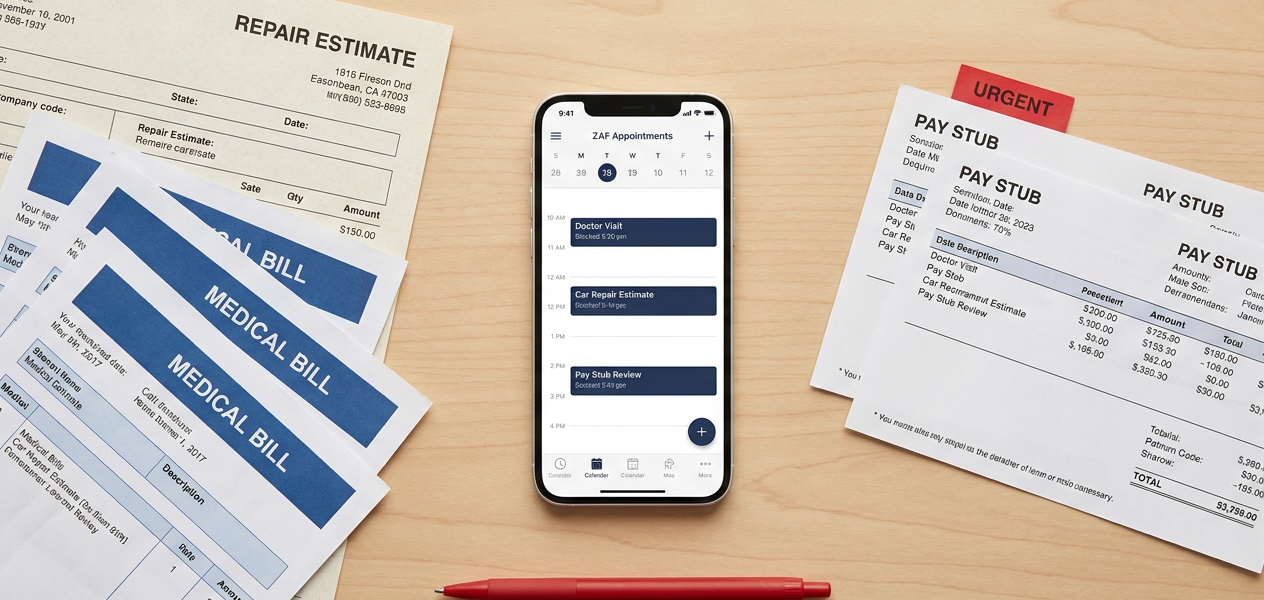

Key Takeaways:
- Following a structured, step-by-step checklist after a car accident is crucial for protecting your health, finances, and legal rights.
- Thorough documentation—photos, witness statements, medical records, and expense tracking—significantly strengthens your insurance claim and potential compensation.
- ZAF Legal’s free AI case assessment empowers accident victims to understand their claim’s value and decide whether to proceed independently or with legal representation, with no upfront cost or obligation.
A car accident can turn a normal commute into complete chaos in seconds. Knowing the right steps to take after a car accident can mean the difference between a strong claim and a costly mistake.
That is exactly what the 12 steps below are built for. They cover the accident scene, medical care, post-accident insurance steps, and what your case might be worth, from medical costs to lost wages. Medical bills are often handled through PIP/MedPay, health insurance, or provider liens. That means care may not cost you anything out of pocket. ZAF Legal’s free AI case assessment is a good place to start, so you know exactly where you stand.
How to Use This Car Accident Checklist Without Missing a Critical Step
Using a car accident checklist after a crash the right way can make a real difference in what your claim is worth. Safety, documentation, medical care, and insurance reporting are all connected. California’s insurance regulator outlines a clear sequence for post-accident steps. Skipping or reordering them can create gaps that are hard to fix later. The order matters because each step affects the next.
Small decisions made at the scene can matter more than most people realize. What gets photographed, what gets said, and whether medical care is delayed can all shape how a claim plays out. Peer-reviewed research on traffic accident injuries confirms that early documentation directly influences legal and insurance outcomes. No checklist can replace legal advice, but knowing the basics helps you decide what kind of support makes sense. ZAF Legal’s free AI assistant is a good place to start. It helps you understand whether you have a case, what it might be worth, and whether an attorney would likely net you more.
1. Check for Injuries and Call 911 First
Your first move after a crash is to check for injuries and call 911 if anyone may be hurt. Federal EMS data shows emergency medical services respond to roughly 1.5 million crash scenes every year. Adrenaline can mask serious pain. It is always better to let trained responders evaluate the situation, even if you feel okay in the moment.
If a paramedic recommends an ambulance ride, worrying about the cost is completely reasonable. Ambulance bills can feel like one more expense you cannot absorb right now. In most cases, though, those costs can be paid through PIP, MedPay, or your health insurance. PIP (Personal Injury Protection) and MedPay (Medical Payments coverage) are both common features in auto insurance policies. They can also be recovered later through your injury claim against the at-fault driver.
2. Move to a Safe Location After a Car Accident if You Can
Once 911 is on the way, knowing when and how to move to a safe location after a car accident is the next priority. Secondary collisions are a real danger when vehicles sit in a live lane, and a few quick actions can make the scene meaningfully safer for everyone involved.
- Move drivable vehicles to the shoulder or a nearby lot if it is safe and does not require crossing active traffic. AAA recommends doing this as soon as practical to reduce the risk of a second collision.
- Turn on your hazard lights immediately. Flashing lights alert oncoming drivers and give everyone on the scene more time to react.
- Place cones, flares, or reflective triangles behind the vehicle if you have them on hand. If not, staying well off the road with hazard lights on still helps.
- Do not move anyone with a suspected neck, back, or head injury. AARP advises leaving injured occupants in place until emergency responders arrive, because moving someone with a suspected spinal injury before trained help arrives can cause additional harm.
- Wait on the sidewalk or grass, away from the road, once vehicles are moved. Standing near a live lane puts you at unnecessary risk, especially at night or in low-visibility conditions.
3. Avoid Admitting Fault at the Accident Scene
Right after a crash, it is natural to say “I’m sorry.” But admitting fault at the accident scene is one of the most common mistakes people make. Even a well-meaning apology can be read as an admission of responsibility before anyone knows the full picture.
Instead, the safest approach is to stick to the facts: what happened, where it happened, and when. Let the police report, insurers, and if needed, an attorney sort out who was responsible. This matters especially in states with shared fault rules, where your compensation can be reduced if you are found even partially responsible. Calm, neutral statements at the scene protect your accuracy and keep your options open.
4. Exchange Insurance and Contact Information Carefully
When exchanging insurance and contact information after a car accident, prioritize accuracy and keep interactions strictly factual to protect your claim. Collect the other driver’s full name, contact information, driver’s license number, license plate, and insurance details—including the policy number and effective date—before leaving the scene.
Provide only your own basic insurance and contact details in return, avoiding any speculation about fault, injury severity, or damage costs, and refrain from making informal agreements. Additionally, document the location, time, and road conditions, and if the other driver is uncooperative, request assistance from the responding police officer to ensure the exchange is properly recorded.
5. Take Photos of the Accident Scene Before Evidence Disappears
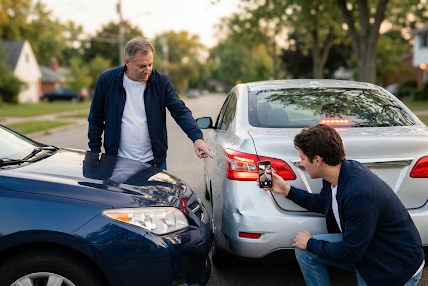
If you can do it safely, pull out your phone. When you take photos of the accident scene, you’re capturing details that memory alone will miss. According to California’s insurance guide, photographing vehicle damage, traffic controls, and obstacles right away is one of the most practical things you can do. That means getting shots of vehicle positions, skid marks, debris, road conditions, and any nearby signs, all before the scene gets cleared.
6. Get Witness Statements After a Car Crash While Memories Are Fresh
Knowing how to get witness statements after a car crash can make a real difference if fault is ever disputed. Bystanders often notice things both drivers miss, and a neutral account from someone with no stake in the outcome can meaningfully strengthen your claim. If no witnesses were present, photos and dashcam footage from nearby vehicles can serve a similar purpose.
- Approach any bystanders quickly and record what they say right away. Research shows that witness memory accuracy drops noticeably after the first 24 hours, and witnesses often leave the scene before anyone thinks to approach them.
- Collect each witness’s name, phone number, and a brief description of what they saw. State insurance guidance recommends this as a standard step, and even minimal contact information can become valuable if the claim is later disputed.
- Note where each witness was standing when the crash happened, because their vantage point affects how much weight their account carries.
- Do not count on the police report to capture every witness. Officers may not speak with every bystander, so collecting contact details yourself gives you a record that the police report may not include.
- If a witness is reluctant to share their information, note their vehicle description and license plate. Nearby businesses or traffic cameras may also have footage worth requesting before it gets deleted.
7. File a Police Report After a Car Accident and Ask How to Get a Copy
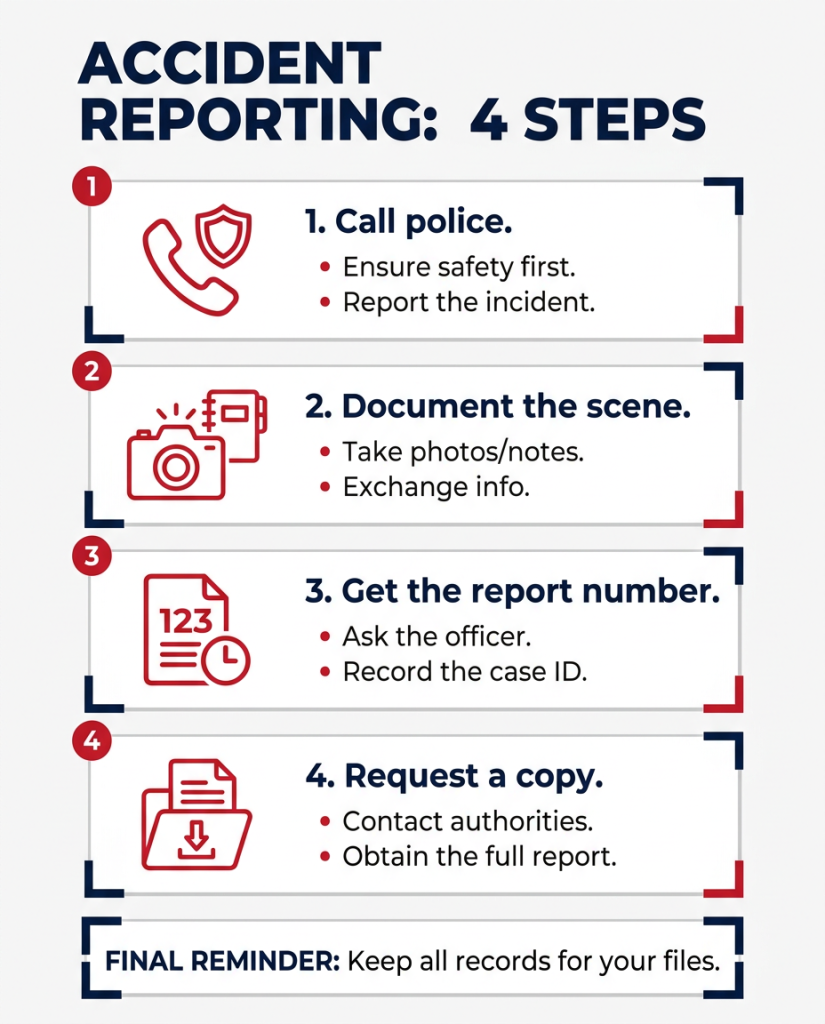
Filing a police report after a car accident creates an official record that insurers rely on when evaluating fault, damage, and coverage decisions. If officers do not respond to the scene, you can often file a report directly through your local department or a state reporting system. Some states require drivers to file their own report when damage or injuries meet a minimum dollar amount or severity level. If the report contains an error, you can often request a correction through the reporting agency.
Before leaving the scene, ask for the report number and find out how to get a copy later. Processing times vary by location, and in New York City, NYPD collision reports are often available online within about seven business days. In Massachusetts, you can request a copy through the state’s online RMV portal. If the wait feels frustrating, the report number alone is often enough to get your insurance claim started.
8. Seek Medical Attention After a Car Accident Even if You Feel “Okay”
Adrenaline can mask pain after a crash, and injuries that feel minor at the scene can worsen within days. According to the CDC, crash injuries send millions to emergency rooms each year, and many symptoms appear hours or days later.
Medical documentation research shows that getting checked out early makes it easier to prove your injuries came from the crash. If cost is the concern, bills are often covered first through PIP or MedPay, then health insurance. A provider lien lets you receive care now, with the provider paid from any settlement you receive, keeping out-of-pocket costs at zero.
Getting through the door is the first step, and once you do, the follow-up matters just as much. Clinicians at Kaiser Permanente recommend watching for delayed or worsening symptoms and following up with a doctor, even when you feel better.
Consistent follow-up care supports your recovery and creates a record that shows how the accident affected you over time. Gaps in treatment can give insurers a reason to downplay how seriously the crash affected you. Staying consistent with appointments protects both your health and your claim.
9. Notify Your Insurance Company Promptly but Choose Your Words Carefully
Once you’ve handled the immediate scene, notify your insurance company promptly. Most policies require timely notice, and reporting quickly also helps you access available coverage, including PIP or MedPay, for medical bills and vehicle repairs sooner.
- Report the crash as soon as you reasonably can. Many policies have strict reporting requirements, and delays can give insurers a reason to reduce or deny your coverage even when the accident clearly wasn’t your fault.
- Know that the adjuster works for the insurance company, not for you. Insurers are entitled to investigate claims, which is exactly why knowing what you’re required to share and what you’re not matters before you pick up the phone.
- Stick to the basic facts: the date, location, vehicles involved, and a general description of what happened. You don’t need to speculate, fill in gaps, or offer opinions about who caused the crash.
- Be cautious about giving a recorded statement early on, especially before your treatment plan is established or liability is clear. According to insurance regulators, early statements can be used to dispute or minimize what you’re owed, and knowing what you’re required to provide and what you can decline puts you in a better position before that call.
- Avoid describing yourself as fine or okay. Adrenaline can mask real injuries, and saying you feel fine in early conversations can make it harder to recover compensation for symptoms that surface days later.
- Watch what you sign. Insurers may ask for a medical record authorization, but a broad release can give them access to your full medical history, not just records related to the crash. Ask specifically which records are being requested before you agree.
ZAF’s AI assistant includes guidance on what not to say to insurance adjusters, which can help you prepare before making that first call.
10. Keep Records of Accident-Related Expenses From Day One
When you’re already stretched thin, it can feel impossible to think about paperwork. But the costs from a crash rarely show up in one place. They scatter across ER bills, prescription pickups, missed shifts, extra childcare, and gas to follow-up appointments. Starting to keep records of accident-related expenses right away gives you the clearest picture of what the crash actually cost you. It also makes it much harder for an insurer to overlook or undervalue those losses.
- Save every medical bill, receipt, and prescription record as they come in. According to state consumer guides, documenting treatment invoices and repair estimates from the start keeps the process moving and reduces back-and-forth with your insurer.
- Track lost wages carefully. If you missed shifts or were unable to work your full schedule, gather recent pay stubs and ask your employer for a written statement confirming the time and income lost.
- Log every transportation cost tied to the accident. Keeping detailed records of accident-related expenses like mileage, towing fees, and rental car costs is easy with a simple written log, and all of these are recoverable expenses that insurers can otherwise overlook.
- Write down childcare and household disruptions. If you had to arrange extra childcare for school pickups or pay someone to help with groceries while you recovered, note the dates, amounts, and reason. Those expenses count and should be documented.
- Keep notes on every call and save all billing records. Save billing statements and track any corrections or disputes with your insurer or medical providers so nothing slips through the cracks later.
The more complete your records, the less room there is for an insurer to dispute or minimize what you’re owed.
11. Understand Your Car Accident Claim Value Before You Rush to Settle
When it comes to car accident claim value, vehicle repairs are just the starting point. Crash-related costs extend well beyond vehicle damage, covering medical expenses, lost wages, and the ways a crash disrupts daily life. Missed shifts, childcare changes, prescriptions, and transportation to medical appointments can all factor into what a full claim covers. Understanding the full range of what counts is what makes a realistic claim value possible.
12. Talk to a Personal Injury Lawyer After a Car Accident if the Claim Gets Complicated
Not every claim requires an attorney. When injuries are serious, fault is disputed, or multiple insurers are involved, the gap between DIY and represented outcomes tends to widen. In those situations, professional representation can mean a higher settlement, stronger handling of disputed liability, and better protection against insurer tactics. Research on lawyer use in injury claims supports that represented claimants often receive better compensation in complex cases. If you’re weighing whether to talk to a personal injury lawyer after a car accident, that question deserves a real answer before you decide.
Getting that answer starts with understanding where you stand. ZAF’s free AI legal assistant helps you understand whether you have a case and what it might be worth. It also helps you understand whether hiring an attorney would likely put more money in your pocket. The American Bar Association notes that personal injury claims involve liability and damages, two areas where professional guidance often leads to higher compensation. DIY is an option, but for most valid claims, representation produces a better result. You can start a free case assessment at ZAF Legal to get a clearer picture.
Frequently Asked Questions About the Steps to Take After a Car Accident Checklist
After a crash, the questions that keep people up at night are rarely about legal theory. They’re about money, timing, and whether a small misstep has already hurt their options. What follows addresses the most common questions people have after a car accident, from cost concerns to conversations with adjusters.
Should I refuse an ambulance ride if I’m worried about the cost?
Refusing emergency transport when you’re seriously hurt can create gaps in your medical record that insurers may later question. Ambulance and ER costs can often be recovered through your claim or covered by your own auto or health coverage. In many cases, the bill won’t come out of your pocket.
What should I say to an insurance adjuster after a crash?
Report the basics: your name, the date, the crash location, and the other driver’s contact information. Avoid giving recorded statements or describing your injuries before treatment is complete. Early statements can be used to minimize what you’re owed. As state regulators advise, understanding what adjusters are looking for before you talk puts you in a stronger position.
My symptoms didn’t start until a day or two after the crash. Does that hurt my claim?
Not necessarily. Mayo Clinic notes that whiplash and soft-tissue injuries often don’t appear until hours or days after impact. Studies also show that delayed symptoms are common and well-documented in crash-related injuries. Seeking care promptly once symptoms appear and keeping detailed records gives your claim the documentation it needs.
What if I have limited evidence from the scene and I’m not sure whether I need a lawyer?
Limited photos don’t tell the whole story of a claim. Other documentation, including medical records and the police report, can carry real weight with an insurer. A free case assessment can help you understand whether what you have is enough to move forward.
Use This Checklist to Protect Your Health, Your Finances, and Your Options
Knowing what to do after a car accident matters long after the scene is cleared. Each step protects something real: your recovery, your income, and your right to fair compensation. The California DOI offers a useful guide for understanding your rights as an accident victim in your state.
Before accepting any settlement, get clarity first. Understand whether you have a good case, what it might be worth, and how much difference an attorney could make. Feeling uncertain at this point is completely normal, and those are exactly the questions worth answering before you decide anything.
Start a free case assessment at ZAF Legal to find out whether you have a case, what it might be worth, and whether an attorney would make a difference, with no cost to start and no obligation to commit.
Disclaimer: This content is for informational purposes only and does not constitute legal advice, and reading the content does not create an attorney-client relationship.