
 800-503-2102
 Chat with ZAF
How Long After a Car Accident Should I See a Doctor? Understanding Medical and Legal Timelines


Key Takeaways:
- Seek medical attention within 24-72 hours after a car accident, even if you feel fine, as symptoms often appear later. Early documentation is vital for your health and any insurance claim.
- Prompt medical care and clear documentation linking your injuries to the accident significantly strengthen your personal injury claim and reduce the risk of disputes from insurance companies.
- You have multiple payment options for post-accident medical care—including health insurance, MedPay/PIP, and provider payment plans—so don’t let cost concerns prevent you from getting evaluated and treated.
You walked away from the crash feeling fine, but now your neck aches and your head throbs. This delayed pain is completely normal after car accidents. Adrenaline can mask injuries for hours or days.
Here’s what you need to know: seek medical care as soon as possible, ideally within 24-72 hours. Seriously, just go to the doctor. Get checked out. This guide explains medical timelines, cost concerns, and how prompt care affects your insurance claim. Get started with ZAF Legal to understand your options and build your case summary.
Why Timing Matters: Health Risks, Documentation, and Your Claim
Knowing when to see a doctor after a car accident can feel overwhelming when you’re already dealing with stress and uncertainty. The truth is, your body and your potential claim both benefit from prompt medical attention, even when you feel “mostly fine” right after the crash.
Hidden Injuries Often Surface Hours or Days Later
Car crashes generate impact forces that can cause internal injuries with delayed symptoms. Concussions and mild brain injuries frequently develop symptoms hours or even days after impact, including headaches, dizziness, memory problems, and sleep disturbances. Whiplash and soft tissue injuries follow a similar pattern, with pain and stiffness often worsening 24-48 hours after the accident. Early medical evaluation helps catch these issues before they become more serious or harder to treat.
Beyond the Health Implications, Early Medical Records Protect Your Claim Value
Insurance companies often dispute whether injuries are truly related to an accident, especially when there’s a gap between the crash and your first medical visit. When you see a healthcare provider promptly and clearly tell them it was a car accident, you create proper medical documentation linking your symptoms to the accident date. This becomes strong evidence for any compensation claim you might pursue. Understanding your options early can help you make informed decisions about your case, and after addressing your immediate medical needs, ZAF’s AI assistant can help you build a comprehensive case summary.
Choose the Right Level of Care for Your Symptoms
You don’t need to rush to an expensive emergency room unless you have red-flag symptoms like severe head pain, repeated vomiting, confusion, chest pain, trouble breathing, or numbness in your limbs. For most post-accident evaluations, urgent care centers or your primary care doctor can provide thorough examinations at a lower cost. These providers can also refer you to specialists if needed, and help coordinate follow-up care while your insurance claim is being processed.
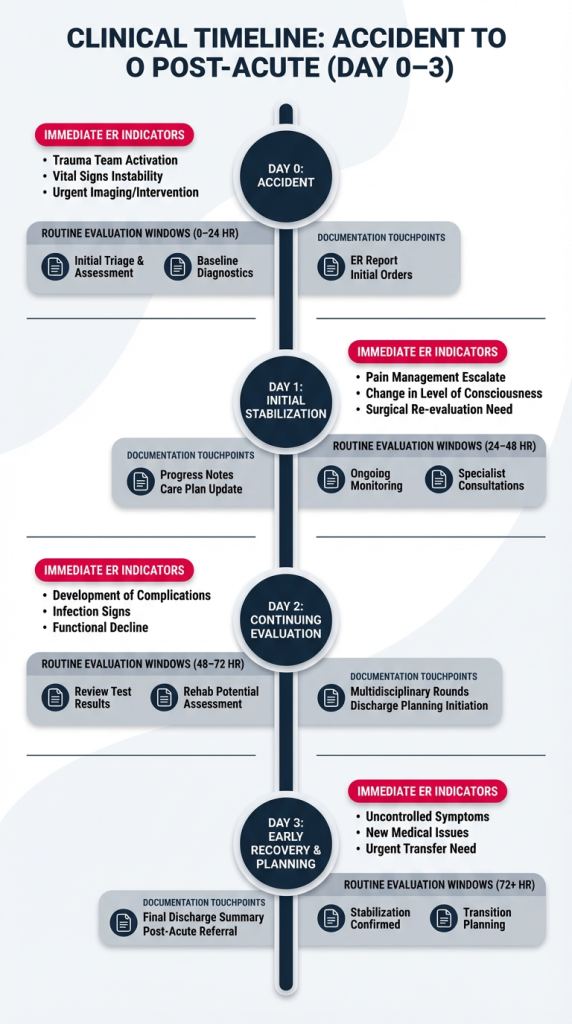
What To Do in the First 72 Hours: Practical, Budget-Aware Steps
Taking the right medical steps after a car accident creates a clear record of your injuries and treatment that strengthens your insurance claim while protecting your health. These actions can be manageable with the right approach, even when money is tight.
- Track your symptoms as they develop. Write down pain levels, headaches, stiffness, sleep problems, or mood changes in your phone’s notes app. This ongoing documentation helps doctors understand your condition and strengthens your claim with specific details insurers can’t dispute.
- Choose the right level of care for your symptoms and budget. Go to the ER immediately for severe pain, head injury signs, chest pain, or numbness. For general soreness, neck stiffness, or mild headaches, urgent care or your primary doctor can provide a thorough evaluation at a lower cost.
- Tell every provider this was a car accident. This helps them document your injuries properly and establishes the connection between the crash and your symptoms. Prompt medical evaluation after an accident is recommended by safety experts because adrenaline can mask serious injuries.
- Ask about billing options before treatment starts. Request that providers bill your health insurance first, then ask about additional car insurance coverage like Medical Payments (MedPay) or Personal Injury Protection if you have it. If you’re worried about upfront costs, inquire about payment plans or medical liens that let you receive care now and pay later from your settlement.A lawyer can walk you through the details of how medical bills get paid in your jurisdiction. This consultation is free at ZAF Legal.
- Save every receipt, discharge summary, and prescription. These documents prove your medical expenses and treatment timeline. Most crash-related medical costs occur in the first 18 months, making early documentation especially important for your claim value.If you’ve already turned the case over to a lawyer, they will handle the documentation of medical expenses for you
- Follow up as recommended, even if it means adjusting your work schedule. Skipping follow-up appointments because you’re worried about costs or missing work can hurt both your health and your claim. Many providers offer payment arrangements, and untreated injuries often worsen over time.
Understanding Your Payment Options: Who Covers Medical Bills After a Car Accident
One of the biggest worries after a crash is understanding who pays medical bills after a car accident while your insurance claim is still pending. Here are your main payment options and what to expect from each.
| Coverage Source | When It Applies | Pros | Cons | What To Ask |
|---|---|---|---|---|
| Your Health Insurance | Always available for covered services | Standard copays and deductibles you’re used to; pays immediately | May seek reimbursement from your settlement | “Will you bill my health insurance first?” |
| MedPay/PIP | If you have this coverage on your auto policy | Covers out-of-pocket costs quickly; no reimbursement required | Limited coverage amounts; not available in all states | “Do I have MedPay or PIP coverage?” |
| At-Fault Driver’s Insurance | After they accept liability (can take weeks/months) | Covers all accident-related expenses | Payment delayed until liability determination | “When will liability be determined?” |
| Provider Lien/Payment Plan | When cash flow is tight | Keeps treatment on track; flexible payment terms | Creates debt obligation; may include interest | “Do you offer liens or payment plans?” |
Most providers are experienced with car accident cases and can work with you on billing arrangements without creating unmanageable costs. If you have Medicare, note that Medicare may pay your bills initially but will seek reimbursement from any settlement you receive. More and more accident victims are receiving their medical treatment on a provider lien where the provider is getting paid out of the eventual settlement. This keeps out-of-pocket costs at zero and generally ensures that accident victims get all the care they need without money being a major limiting factor.
FAQs: Medical Timing, Minor Accidents, and Your Claim
Accident victims often worry about medical costs, timing, and how their decisions affect their claim. Here are straightforward answers to common car accident doctor visit questions that help you make confident choices about your care and recovery.
What happens if I wait too long to see a doctor after a car accident?
Waiting weeks can make it harder to link injuries to the crash, giving insurers room to argue your pain came from something else. More importantly, some injuries, such as head trauma, can worsen without treatment. You can still file a claim, but quick medical attention strengthens your case.
How does seeing a doctor quickly after a car accident affect my insurance claim?
Early medical records create a clear timeline connecting your injuries to the accident. This documentation helps establish causation and supports your claim’s value. Insurance adjusters have less room to dispute injuries when there’s immediate medical evidence backing up your symptoms.
Can I still file a personal injury claim if I didn’t see a doctor right away?
Yes, but delayed medical care makes it harder to prove your injuries came from the accident. Document symptoms as soon as possible to strengthen your position. ZAF’s AI assistant can help you understand your claim options and build documentation even if you waited to seek care.
Why is it important to get a medical evaluation after a minor car accident?
Even minor crashes can cause injuries that don’t show symptoms immediately. Whiplash, concussions, and soft tissue damage often surface hours or days later. Early evaluation catches these issues before they worsen and creates medical records that support your claim if symptoms develop.
Do I need the ER, urgent care, or my primary doctor—and how do costs differ?
For severe symptoms like head trauma, chest pain, or trouble breathing, go to the ER immediately. For mild pain or stiffness, urgent care or your primary doctor costs less while still providing proper documentation. Ask about billing options when you arrive.
Who pays if my claim is still pending and I can’t afford a big ER bill right now?
If you live in a state that requires PIP coverage, then your medical bills will first be processed under that coverage. The typical PIP limit is $3,000, but on some policies it can be more. These PIP payments come from your own auto insurance policy if you were driving your own vehicle, even if the accident was not your fault. Your insurance carrier will seek reimbursement from the at-fault driver as soon as the investigation is complete. Your health insurance typically pays next with standard copays, then seeks reimbursement from the at-fault driver’s insurer later. Many providers also offer payment plans or liens, where they wait for your settlement to collect payment. Don’t skip care due to cost concerns—ask about your options upfront. Sharing your concerns about receiving all the medical care you need with a lawyer is a great idea. A good lawyer will help you through this challenge and keep your out-of-pocket medical expense burden near zero.
Next Steps: Protect Your Health, Preserve Your Claim, and Keep Costs Manageable
Taking the right next steps after a car accident medical visit means taking care of your health and your finances. If you haven’t seen a doctor yet, schedule an evaluation as soon as possible and follow through on any recommended treatment. Keep detailed records of all appointments, prescriptions, and receipts.
Don’t let cost concerns delay your care or recovery. Ask medical providers about billing options like health insurance coverage, MedPay or PIP benefits, payment plans, or provider liens that let you receive necessary medical care while your claim is pending. Whether you choose to handle your claim independently or work with an attorney, having proper documentation strengthens your position. Get clarity on where you stand and explore your options with ZAF Legal – our free AI assistant helps you understand the claims process and build a case summary you could use as a settlement demand.
This material is provided strictly for informational and guidance purposes and does not constitute formal legal advice; furthermore, reviewing this content does not establish an attorney-client relationship.