
 800-503-2102
 Chat with ZAF
What to Do After an Uber Accident as a Passenger: A Step-by-Step Guide


Key Takeaways:
- Uber passengers are typically not at fault in accidents and have strong rights to compensation for medical bills, lost wages, and other damages—understanding these rights is the first step to a successful claim.
- Documenting the accident thoroughly (medical care, police report, photos, witness details) and reporting it promptly to both authorities and Uber are essential actions that protect your claim and speed up the process.
- ZAF Legal’s free AI Assistant empowers you to organize your claim, understand what your case is worth, and choose your level of support—whether you go DIY, seek a free attorney consultation, or want full legal representation, all with zero upfront costs.
You’re sitting in the back seat when it happens—a sudden crash that leaves you shaken, possibly hurt, and completely unsure what to do next. As an Uber passenger, you weren’t driving, but you’re still dealing with the aftermath of someone else’s mistake.
You have more control than you might think. This guide walks you through each step, from getting medical care (and understanding who typically pays for it) to documenting everything properly and starting your claim. Whether you handle things yourself or need attorney support, ZAF Legal’s free AI Assistant helps you understand where you stand and build a case summary—with zero upfront costs or pressure.
Understand Your Rights and What This Guide Covers
Understanding passenger rights after Uber accident situations starts with knowing you typically aren’t considered at fault for the crash. Your claim focuses on getting compensation for your injuries, medical bills, lost wages, and other losses caused by the accident. Texas insurance regulators confirm that rideshare companies must carry mandatory insurance coverage, and passengers have the right to verify this coverage rather than simply assume it exists.
Building on these rights, this guide addresses the practical reality that multiple insurance companies may get involved—Uber’s policy, your driver’s insurance, and potentially another driver’s coverage if they caused the accident. You don’t need to figure out which insurer pays what while you’re still at the scene. Uber’s claims team coordinates with these insurers so you can focus on your immediate needs. This guide covers the practical steps that matter most: getting safe medical care without breaking your budget, documenting everything properly, and starting your claim with confidence using tools like ZAF’s AI Assistant to understand where you stand.
- Put Safety First: Move to a Safe Spot and Call 911
These essential Uber accident passenger safety steps protect you physically and legally, creating the foundation for everything that follows.
- Get out of traffic and away from hazards. Move to the sidewalk, shoulder, or nearby parking lot if you can do so safely. If the vehicle is blocking traffic and you’re unable to move, turn on hazard lights and stay inside with your seatbelt on until help arrives.
- Call 911 even if injuries seem minor. Adrenaline can mask pain and symptoms that become obvious hours later. The EMS response provides professional evaluation and creates medical records that support your claim if injuries develop.
- Don’t worry about ambulance costs right now. If EMS recommends transport to the hospital, medical expenses from the crash are typically part of what you can recover through your claim. The post-crash care system exists to help accident victims get proper treatment.
- Ask for the police report number. Officers responding to the scene will document what happened, who was involved, and basic facts about the crash. This report becomes important evidence for your claim later.
- Stay calm and avoid discussing faults. You can share basic facts about what you observed, but don’t speculate about who caused the accident or apologize. Focus on getting the help you need and letting professionals handle the scene.
Once you’re safe and help is on the way, your next priority is getting a proper medical evaluation, even if you feel fine right now.
- Get Checked Out: Seek Medical Attention Right Away
You should seek medical attention after your Uber accident within 24 to 48 hours, even if you feel okay right now. Adrenaline can hide symptoms like headaches, neck pain, or back stiffness that may appear hours or days later, and insurers often question medical care that’s delayed for weeks. Getting checked out promptly creates a clear medical record that documents your condition right after the accident, which helps support your recovery process.
When you arrive for treatment, tell the medical staff that you were in a rideshare accident. This helps ensure your visit gets recorded as accident-related care rather than routine treatment, which matters for billing and insurance purposes. If you’re worried about copays or emergency room costs, keep all your receipts and payment records. These reasonable medical expenses are typically part of what you can recover through your claim, so the money you spend now on necessary care will be part of your settlement.
- Report the Crash to the Police and Get a Report Number
When you report your Uber accident to authorities, getting an official police report creates an independent record that can strengthen your claim. Officers document who was involved, when and where the crash happened, and often include their observations about road conditions or vehicle damage. This official documentation helps establish the basic facts of your case when you’re dealing with insurance companies later.
- Ask the responding officer for the report number and instructions on how to get a copy. Most areas let you request copies online or by mail once the report is processed, which usually takes a few days to a week.
- If police don’t come to the scene, file your own report as soon as possible. Many areas let you file online or visit a police station to make a walk-in report, especially for crashes involving injuries or major vehicle damage.
- Write down the responding officer’s name and badge number if possible. This information helps you follow up if you have questions about the report or need additional documentation for your claim.
- Don’t worry about report fees right now. Most jurisdictions charge $10-25 for copies, but these reasonable costs are typically part of what you can recover through your claim, just like your medical expenses.
- If you’re too hurt to handle this yourself, ask a trusted friend or family member to help. They can often file reports on your behalf or help you request copies once you’re feeling better.
- Keep your receipt or confirmation number when you request the report. You’ll need this documentation for your insurance claim, and having the tracking information helps you follow up if there are delays.
Remember that official crash reports serve as legal records that insurance companies and attorneys use to understand what happened. Getting this documentation early protects your ability to prove the basic facts of your case, even if other details need to be sorted out later.
- Document the Scene with Photos and Notes
Start taking photos as soon as it’s safe to document the Uber accident scene details that support your claim. Capture vehicle positions before they’re moved, all visible damage to every car involved, and license plates of all vehicles. Take clear photos of your Uber driver’s ID and insurance information, and take screenshots of your active trip in the app showing pickup, destination, and driver details. If you have any visible injuries like cuts, bruises, or swelling, photograph them now and again over the next few days as they develop. The DDOT recommends photographing vehicle make and model details, location markers like street signs, and any debris or skid marks on the roadway.
Beyond the immediate crash details, don’t forget to capture the bigger picture that tells the story of what happened. Take wide shots showing weather conditions, road surface, traffic signals, and any nearby businesses or traffic cameras that might have recorded the crash. Write a quick note on your phone about how you feel right now, even if you think you’re fine. Medical experts emphasize that documenting symptoms immediately after an accident creates a timeline that shows how injuries develop. The FHWA notes that thorough scene documentation helps investigators and supports your version of events when insurance companies review your claim.
- Collect Names and Numbers of Witnesses
When you collect witness information after your Uber accident, you’re gathering accounts from people who saw what happened firsthand. Don’t worry if approaching strangers feels awkward—most people understand accidents are stressful and are willing to help if you ask politely. If the police are involved, they are likely gathering witness statements for you. But having a little extra evidence of your own doesn’t hurt.
- Ask for basic contact information and a quick statement. Request names, phone numbers, and a brief description of what they saw—like which direction vehicles were traveling or who had the right of way. Collecting witness details immediately is recommended by state insurance departments because people may leave the scene quickly.
- Focus on people who don’t know anyone involved. Their neutral perspective is more convincing to insurers than statements from friends or family members who happened to be nearby.
- Record their statement on your phone or write it down quickly. Witnesses can significantly strengthen your car accident claim, so capture their account while the details are fresh in their memory.
- Back up their information immediately. Text yourself their contact details or email the information to yourself right away. Note the time and location where you spoke with each witness in case you need to follow up later.
- Don’t pressure anyone who declines. Some people prefer not to get involved, and that’s okay. Thank them anyway and move on to others who might be willing to share what they observed.
- Notify Uber Through the App as a Passenger
Open your Uber app and locate the trip receipt to report the accident to Uber through the Help section. This step confirms your passenger status and triggers their insurance process. The receipt contains time, route, and driver details that establish your ride was active during the crash. Take screenshots of your report submission and save any confirmation messages you receive.
When you contact Uber about the crash, stick to basic facts like the time, location, and that you were injured. Avoid guessing about who caused the accident or describing your injuries in detail before seeing a doctor. The company’s safety team will follow up, and your factual report helps them connect you with the right insurance coverage. Keep all communications organized in a folder on your phone for easy reference later.
- Know the Coverage: Uber’s Insurance for Passengers
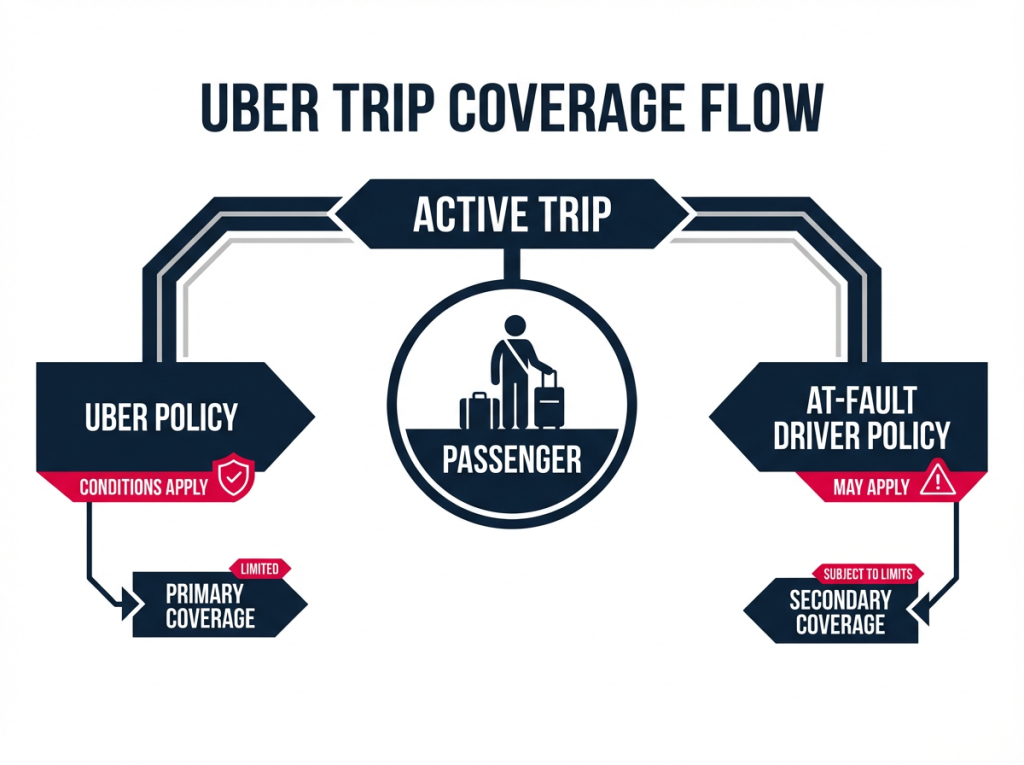
When you’re on an active Uber trip, it’s important to understand Uber insurance coverage for passengers because you have protection that kicks in automatically. Uber provides at least $1,000,000 in liability coverage when you’re a passenger in the vehicle, which means there’s substantial coverage available for your medical bills, lost wages, and other damages. This coverage applies regardless of whether your Uber driver or another driver caused the crash. Additional coverages like uninsured motorist protection may also apply, depending on your state and the specific circumstances of the accident.
However, understanding coverage and actually accessing it are two different things. What makes this complex is that multiple insurance policies might be involved, and determining which policy responds first can be challenging. Your Uber driver has their own personal insurance, the other driver involved may have coverage, and Uber’s commercial policy provides additional protection when needed. Don’t panic if one insurer initially denies your claim or points to another company. Coverage coordination between these different policies is common, and a denial from one doesn’t mean you’re out of options. Your screenshots of the active trip and trip receipt are your proof that Uber’s commercial coverage applies to your situation.
- Track Every Bill, Copay, and Expense…unless a lawyer is doing it for you already
Many expenses you’re worried about paying now—like ER copay or prescription costs—can be recovered through your claim, but only if you document them properly. Learning how to track medical bills and expenses from your Uber accident protects your right to full compensation and speeds up the settlement process. If you have hired a lawyer, they should gather all of this documentation on your behalf.
- Save all medical receipts and bills. Keep ER visits, urgent care copays, prescription costs, and any follow-up appointments. The IRS recognizes medical expenses, travel for treatment, and related costs as legitimate documented expenses.
- Take photos of receipts with your phone immediately. They’re easier to lose than you think, and a clear photo is just as valid as the original. Store them in a dedicated folder on your phone or email them to yourself.
- Track mileage and transportation costs. Document miles driven to medical appointments, parking fees, tolls, and rideshare costs to get treatment. If the family helps with rides, note the mileage and dates.
- Document any missed work immediately. Ask your employer for a simple letter confirming missed shifts, hourly wage, and the dates you couldn’t work. Keep pay stubs showing your normal earnings. Lost wages claims require specific documentation, such as doctor’s notes and employer wage verification.
- Save childcare and household help receipts. If your injuries require extra childcare or help with daily tasks, keep those receipts. These costs directly relate to your accident-caused limitations.
- Create a simple expense worksheet. List each cost with the date, amount, and how it connects to your injuries. Government compensation programs show that organized records with clear connections to your accident help speed up claims and reduce disputes.
- Use ZAF’s free AI Assistant to organize your expense summary. It can help you understand how these costs fit into your overall claim and build a comprehensive case summary you could use as a settlement demand.
- Start Your Claim with the Right Insurer
You can file a claim after an Uber accident with multiple insurers to protect your rights, and filing claims doesn’t cost you anything upfront. Start by reporting the incident through Uber’s app to open a claim with Uber’s insurance carrier. If another driver caused the crash, contact their insurance company too. Each insurer will assign you a claim number, which helps you track updates and reference your case. Don’t worry about sorting out which insurer pays what—that’s their job to coordinate. There is some risk to setting up these claims on your own without a lawyer. Be aware that if your injuries are anything other than minor, the stakes are pretty high and a mistake would be costly.We recommend at least having a free consult with a licensed lawyer before contacting the at-fault party’s insurance.
When you file your claim, share basic facts like the date, time, location, and your passenger status, along with photos and the police report number. However, avoid giving detailed recorded statements until you understand your rights and coverage options. The NAIC recommends that rideshare passengers verify coverage before making formal statements. ZAF’s AI Assistant can help you organize your facts and build a clear case summary before you submit any settlement demand, giving you confidence about what to share and when.
- Use a Free AI Legal Assistant to Get Oriented
Using an AI legal assistant for Uber accident claims can help you understand where you stand without the pressure or cost concerns that often prevent people from seeking guidance. ZAF’s AI Assistant provides a starting place to get your bearings, learn about the claims process, and organize your information into a clear case summary.
- Get clarity on the claims process without upfront costs. The AI Assistant helps you understand how rideshare insurance works, what documentation matters, and what your next steps could be. The ABA emphasizes that AI tools can provide valuable legal information and organizational support when used transparently.
- Build a case summary you could use as a settlement demand. It helps you organize your medical records, expenses, lost wages, and other damages into a clear summary. This creates a complete picture of your claim’s value and produces a document you could submit directly to insurers if you choose the DIY path.
- Understand the difference between information and advice. The tool provides guidance about the claims process, but it doesn’t establish an attorney-client relationship or give specific legal advice. Legal experts make this important distinction—information helps you understand your options, while advice involves applying the law to your specific situation.
- Know when an attorney consultation makes sense. It shows you situations where your case might benefit from professional involvement, such as disputed liability, significant injuries, or complex insurance coordination. Ethics guidance supports this approach of helping users recognize when legal advice becomes appropriate.
- Stay in control of your decisions. You choose how much or how little help you want, whether that’s handling everything yourself with AI guidance or connecting with an attorney for a consultation. There’s no pressure to hire anyone or pay upfront fees.
- Know When to Talk to a Personal Injury Attorney
Some Uber accident situations benefit from attorney guidance, especially when injuries are significant, liability is disputed, or multiple insurance companies are pointing fingers at each other. If you’re dealing with serious injuries that require ongoing treatment, complex pain that affects your daily life, or insurers who are questioning fault, a free consultation can help you understand your options. You’re also not alone if insurers are offering settlements that don’t cover your actual expenses. You’re not committing to anything by talking to an attorney, and the conversation can clarify whether your situation needs expert help.
Personal injury attorneys work on contingency, which means zero upfront attorney fees and no payment unless there’s a recovery from your case. This arrangement removes the financial barrier that often prevents people from seeking legal help when they need it most. An experienced attorney can handle complex negotiations with multiple insurers, protect you from pressure tactics or lowball settlement offers, and ensure you’re not accepting less than what your injuries and losses are actually worth. ZAF Legal connects you with experienced attorneys when you decide attorney support works better for you than handling things yourself.
- Understand the Settlement Process Timeline
After filing your claim and organizing your documentation, you’re in control of how the settlement process moves forward. Understanding what insurers look for and how timing works can help you stay informed and confident about any offers you receive.
- Medical treatment completion often drives the timeline. Insurers prefer to settle after your doctor says you’ve recovered as much as you’re going to, so they can see the full scope of your injuries and costs.
- Insurers evaluate three main factors: liability (who caused the crash), coverage (which policies apply), and damages (your documented losses). The clearer your evidence on each point, the smoother the process tends to go.
- Strong documentation speeds things up and strengthens your position. Complete medical records, organized bills, wage loss letters, and clear photos help adjusters understand your case without back-and-forth requests for more information.
- First offers are often lower offers that may not fully cover your losses, and you can negotiate. Insurers typically start with initial offers to see if you’ll accept quickly. You’re not required to take the first number, especially if it doesn’t cover your actual expenses and losses.
- Your medical providers may wait for settlement payment, but communicate with them about your accident claim to avoid collection issues. Let billing departments know you have an active claim and ask about payment arrangements if needed.
- Payment usually happens within 30 days of accepting a settlement. Once you agree to the terms and sign a release, the check typically arrives fairly quickly, giving you the financial relief you’ve been waiting for.
- Even in complex Uber passenger accident settlement processes with multiple insurers or disputed faults, you have options. These cases may stretch several months while insurers sort out responsibility, but an attorney can help navigate these situations and ensure you’re not shortchanged while waiting.
Frequently Asked Questions
After an Uber accident, passengers often have immediate questions about costs, timing, and their options. These answers address the most common concerns about medical bills, insurance interactions, and getting the support that fits your situation.
Who pays my ER bill and ambulance if my claim is still pending?
Keep receipts for any medical costs—these are recoverable through your claim. You’ll typically pay upfront and seek reimbursement once the responsible party is determined. Use your health insurance to reduce immediate costs. If you’re worried about affording care, many providers offer payment plans or will wait for settlement proceeds.
Should I accept a quick settlement offer from an insurer?
Early offers often come before you know the full extent of your injuries or expenses. Don’t feel pressured to accept immediately. ZAF’s AI Assistant can help you understand what a fair settlement should cover before you respond. If it doesn’t account for ongoing treatment or lost wages, you can negotiate or decline.
Do I have to give a recorded statement to any insurance company?
You don’t have to give recorded statements to other drivers’ insurers. You may need to cooperate with Uber’s insurer as part of their coverage. Before any recorded statement, understand what you’re agreeing to. Consider using ZAF’s free AI Assistant to learn what to expect and how to protect your interests.
What if I didn’t feel pain at the scene but hurt the next day?
Delayed pain is common after accidents due to adrenaline and shock. See a doctor within 24-48 hours, even if you feel fine initially. Tell medical providers about the accident so treatment is properly documented. Insurers may question delayed care, but this is medically normal and doesn’t invalidate your claim.
Can I handle this myself, and when would I benefit from attorney help?
Many passenger claims can be handled independently, especially with clear liability and documented damages. ZAF’s AI Assistant helps you understand the process and build a case summary you could use as a settlement demand. Consider attorney help if injuries are significant, multiple parties dispute fault, or insurers deny coverage.
You’re Not Alone—Get Clarity and Support Today
Being in an Uber accident as a passenger can feel overwhelming, but you have clear next steps after an Uber passenger accident and concrete support available. From seeking prompt medical care to documenting everything and understanding your coverage options, each action protects your rights and builds your case. The post-crash care system is designed to help accident victims get the assistance they need.
Most importantly, you don’t have to navigate this alone or worry about upfront costs. Whether you choose to handle your claim independently, seek a free consultation, or work with an attorney on contingency, the path forward starts with understanding where you stand. ZAF’s AI Assistant provides legal information and guidance to help you build a case summary, while connecting you to licensed attorneys when you want specific legal advice.
Get clarity on your Uber accident claim with ZAF Legal today.